
Thai Seafood Soup (Tom Yum Talay)
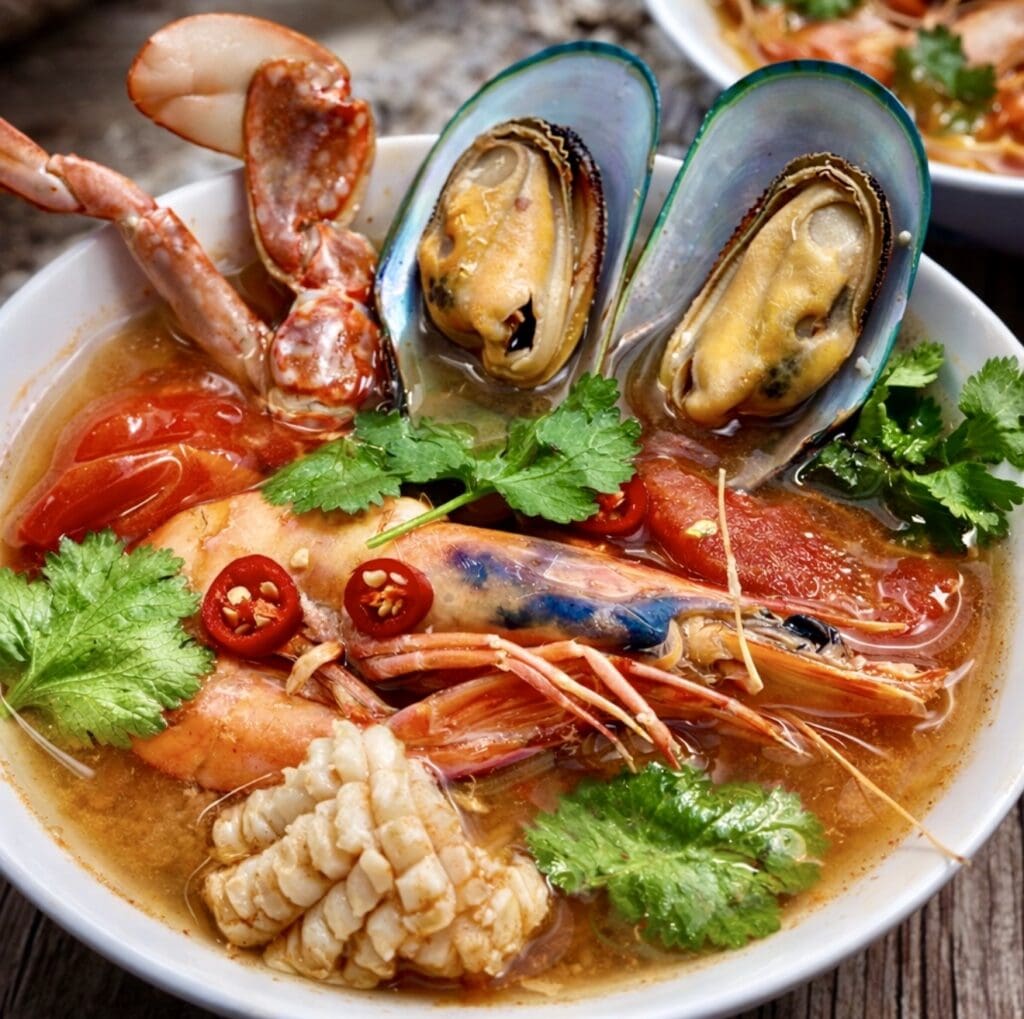
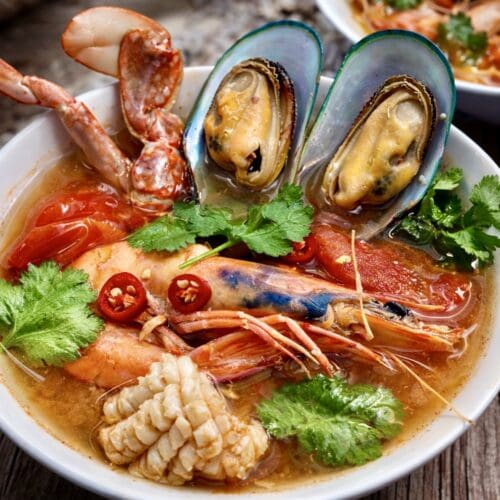
This Thai seafood soup is spicy, fragrant and packed with prawns, fish, mussels, squid and crab. An easy homemade recipe that beats takeout.
Updated 2 January 2026
Thai Tom Yum Goong, which means hot and sour soup with prawns, is one of my favourite Thai soups. It’s the perfect comfort dish when I’m craving a beautifully fragrant broth with a balanced hit of spicy, sour and subtle sweet flavours infused into a rich prawn stock.
Meet Tom Yum Talay, a lesser-known version of Tom Yum that’s just as delicious, if not more so. Instead of just prawns, it’s packed with an exciting selection of mouthwatering seafood for an even more satisfying bowl.
Thai restaurants here usually serve Tom Yum Goong as an appetiser. It arrives in a small bowl with just a few prawns, mushrooms and tomatoes. Honestly, I don’t mind at all. If the broth is done right, nothing else matters. Give me that fragrant prawn broth with some steamed rice and I’ll be happily slurping away in my own little world.
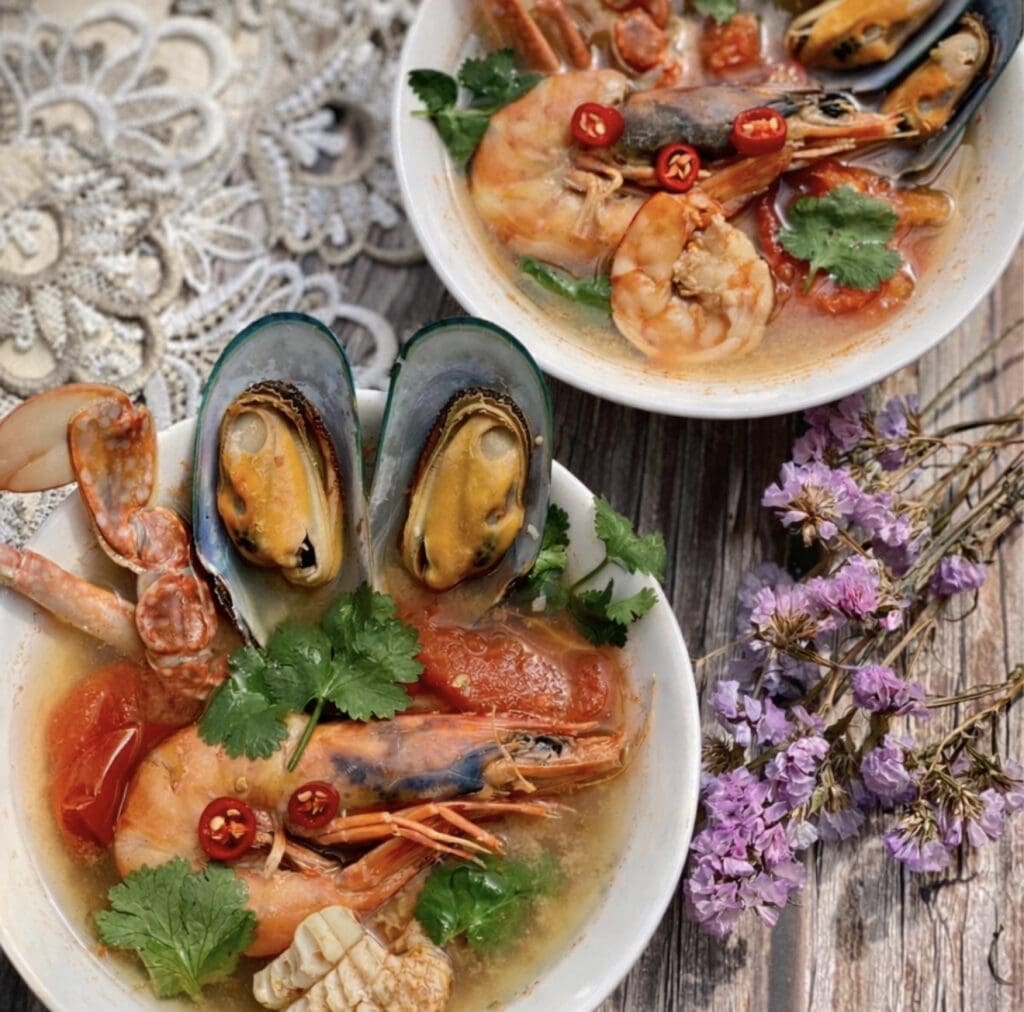
That said, what if we could have the best of both worlds? An authentic-tasting Thai Tom Yum broth paired with a generous serving of seafood. Let’s make it happen in the comfort of our own kitchen, and you won’t believe how approachable this recipe really is.
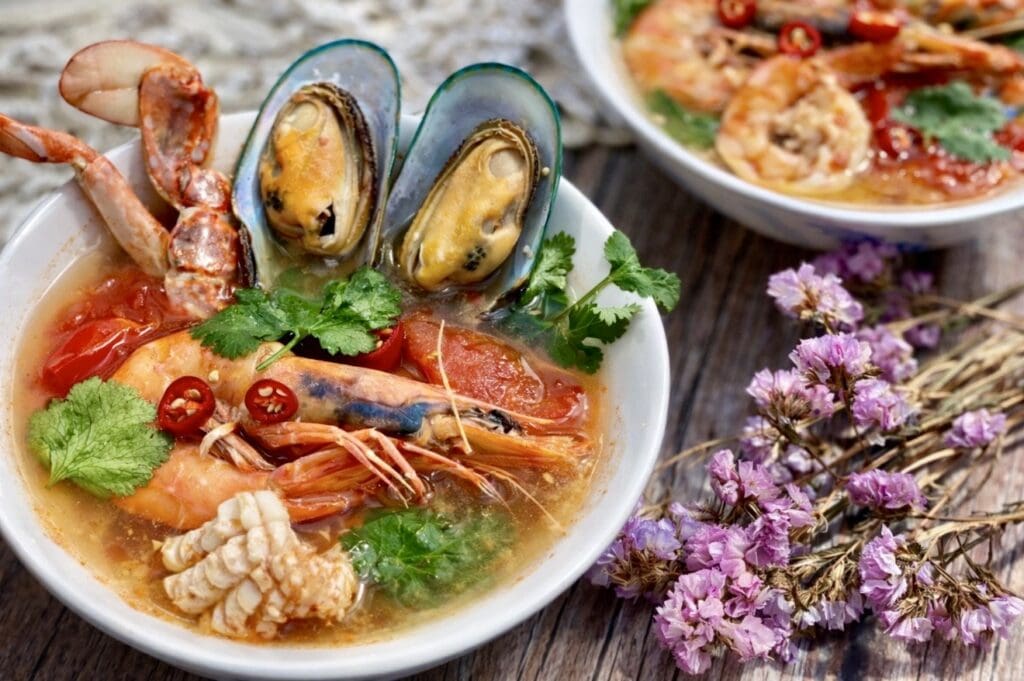
Serve this Thai seafood soup with jasmine rice, and it becomes a full, satisfying meal. The aromatic flavours of lemongrass, galangal and kaffir lime leaves pair beautifully with crab, mussels, fish, squid and prawns.
What is Tom Yum Talay?
Tom Yum Talay vs Tom Yum Goong
Tom Yum Goong is a classic Thai hot and sour soup made with prawns and a fragrant broth. It’s usually served as an appetiser with a few prawns.
Tom Yum Talay is the seafood version of Tom Yum. Along with prawns, it includes a generous mix of seafood such as crab, mussels, squid and firm white fish, turning the soup into a heartier and more satisfying meal.
Why this Thai Seafood Soup is better than takeout
Compared with most takeout options, this homemade Thai seafood soup is brimming with seafood. You’re in full control of the ingredient quality and can balance the spicy, sour and sweet flavours exactly to your taste. Being able to cook it your way and choose the freshest seafood is already a win, and well ahead of takeout.
For the latest recipes, join our FREE 3CatsFoodie mailing list
Ingredients for Thai Seafood Soup
For the soup
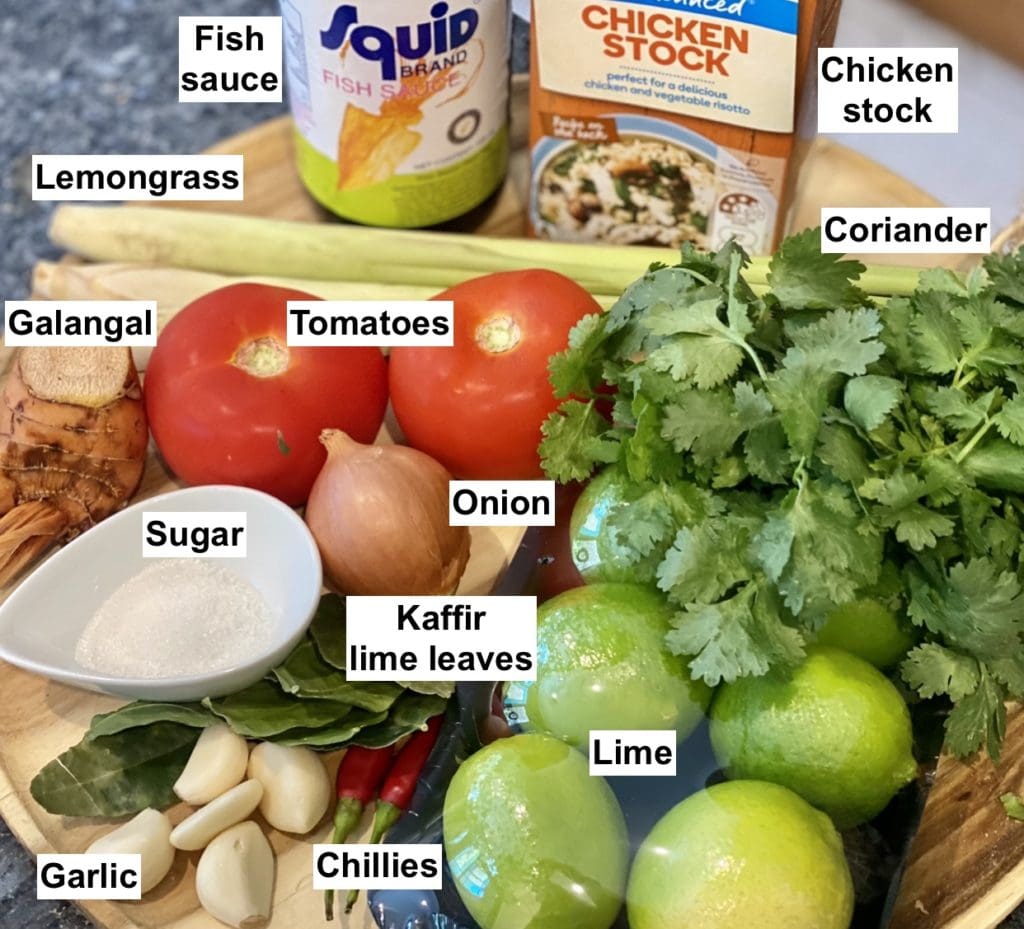
Galangal: Galangal root looks similar to ginger, but it’s firmer and harder to cut through. It has a citrusy, slightly woody flavour, while ginger tastes warmer and more peppery. They’re not truly interchangeable, but if you can’t find galangal, ginger is the closest substitute. Use a little less ginger than galangal, as it’s more potent.
Lemongrass: Cut about 2-3 cm from the base of the lemongrass, then keep 10-15 cm of the stalk and discard the rest. Peel away 3-4 outer layers, then cut the stalk in half. Lightly smash the lemongrass with a heavy object, such as a rolling pin, to help release its fragrant oils while cooking.
Kaffir lime leaves: Kaffir lime leaves are fragrant, glossy green leaves with a distinctive shape. A single leaf often looks like two leaves joined at the ends. When sold separately, they are usually already split, so count the leaves as they are. For this recipe, one joined leaf equals two individual leaves.
For the Seafood
Chicken stock: I prefer using salt-reduced chicken stock so I have more control over the sodium level. It’s always better to start slightly under-seasoned than over-seasoned, as you can easily adjust the flavours to suit your taste.
Fish sauce: My favourite brand is Thai Squid fish sauce, but any good-quality fish sauce will work. You’ll usually find it in the international aisle at supermarkets or at Asian grocery stores. Fish sauce has a strong, pungent aroma, but it adds incredible depth and savoury flavour to Thai and other Asian dishes.
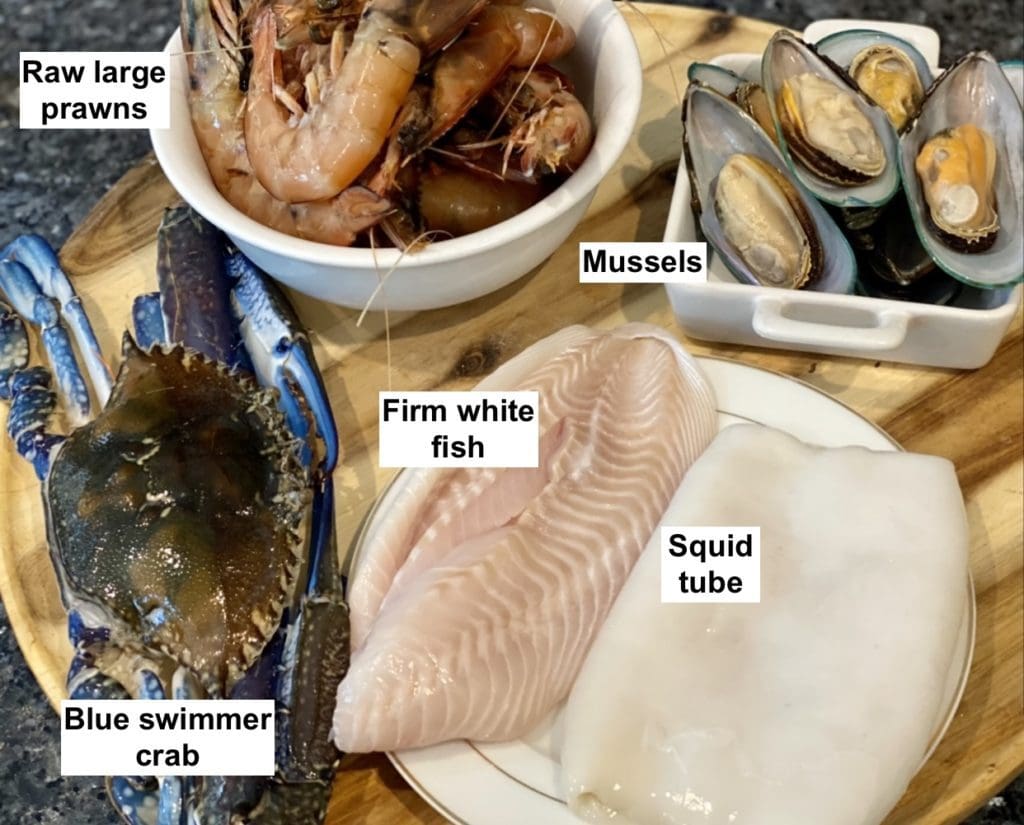
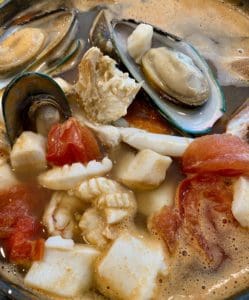
Seafood: The only seafood that’s essential in this recipe is raw prawns, as the shells are used to flavour the broth. Beyond that, you can customise the soup with whatever seafood you enjoy. I used firm white fish (snapper fillet), squid tube, blue swimmer crab and mussels, but feel free to use what you have available.
How to make Thai Seafood Soup
Step-by-step guide
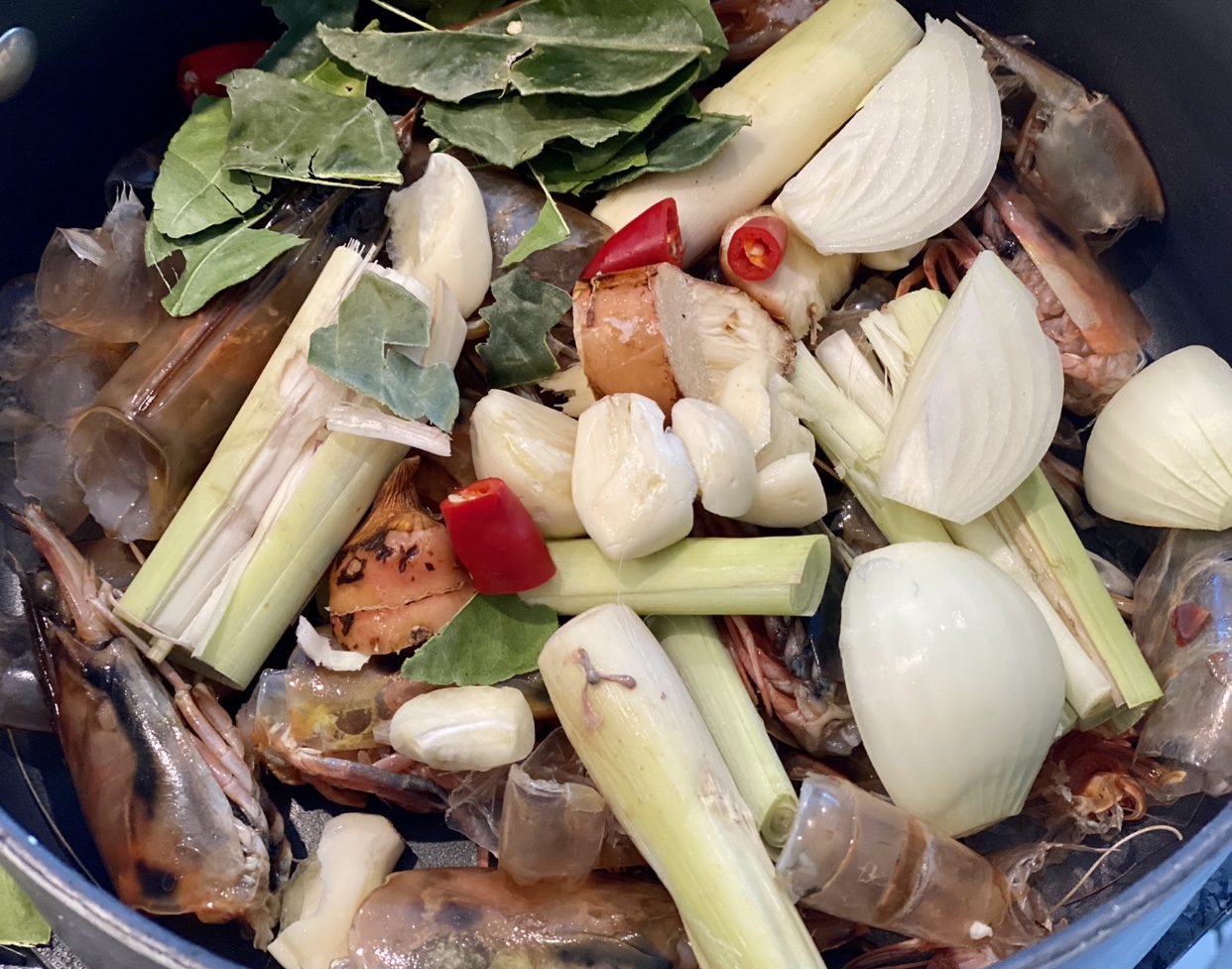
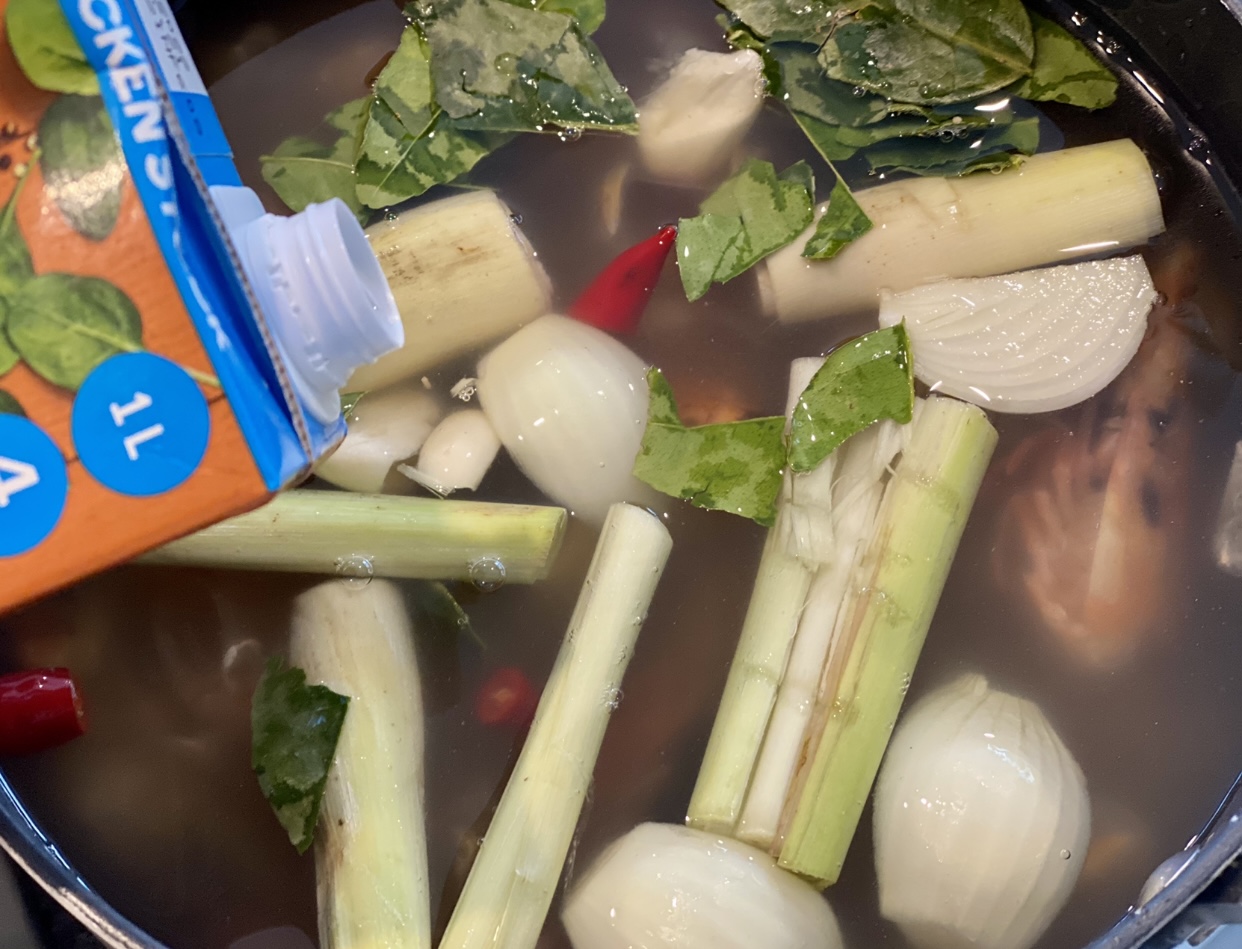
1. Peel the prawns, leaving the tails intact, but do not discard the heads and shells, as they’re used to flavour the broth. Slice a shallow slit along the back of each prawn and remove the intestinal tract. Optional: For presentation, you can leave a few prawns unpeeled to place on top of the soup before serving.
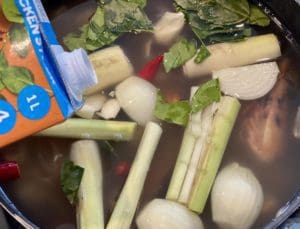
2. In a large saucepan, add the prawn heads and shells only (not the peeled prawns), along with the garlic, onion, galangal, lemongrass, kaffir lime leaves and chillies. Pour in the chicken stock and water, then place over medium heat and bring the broth to a boil.
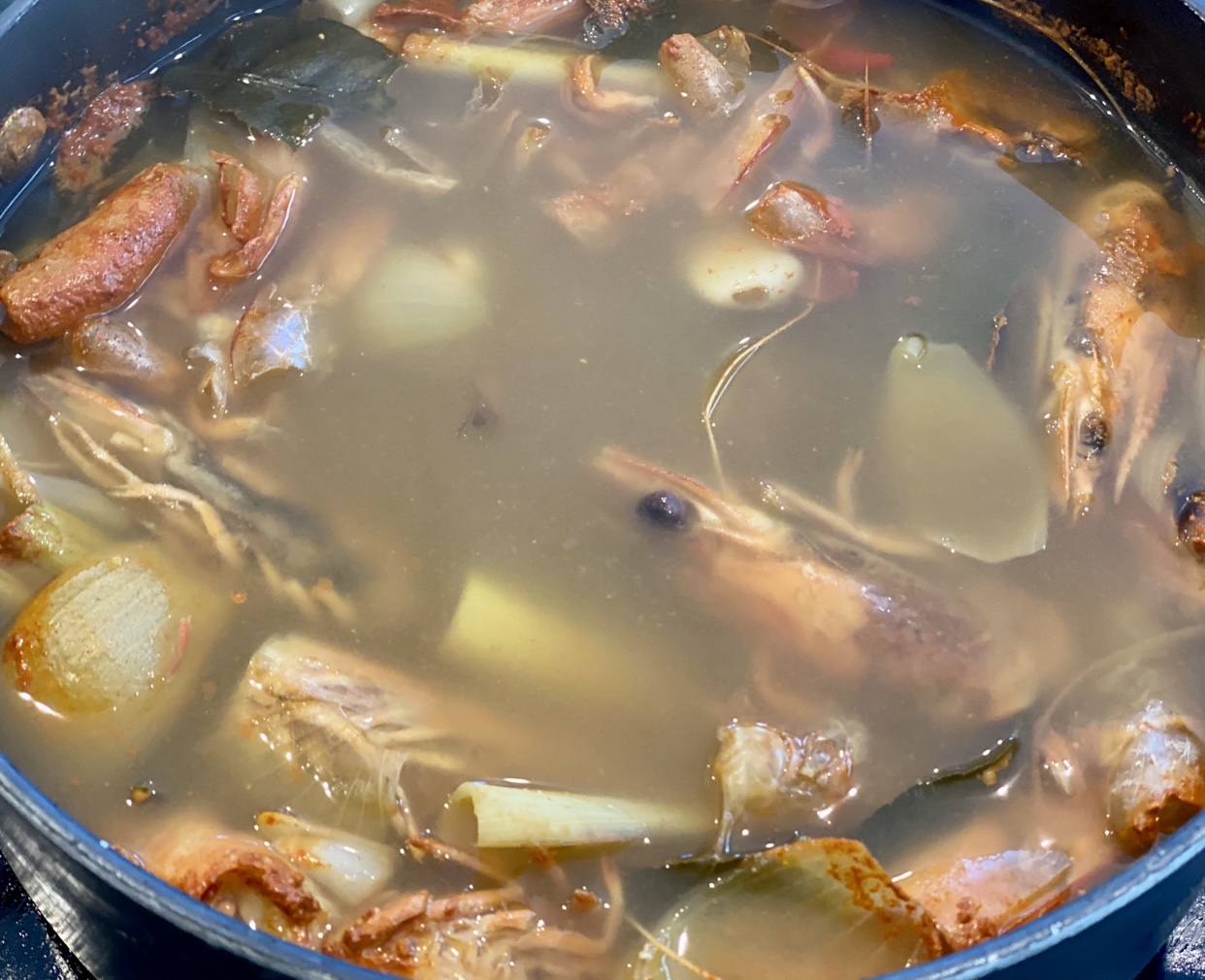
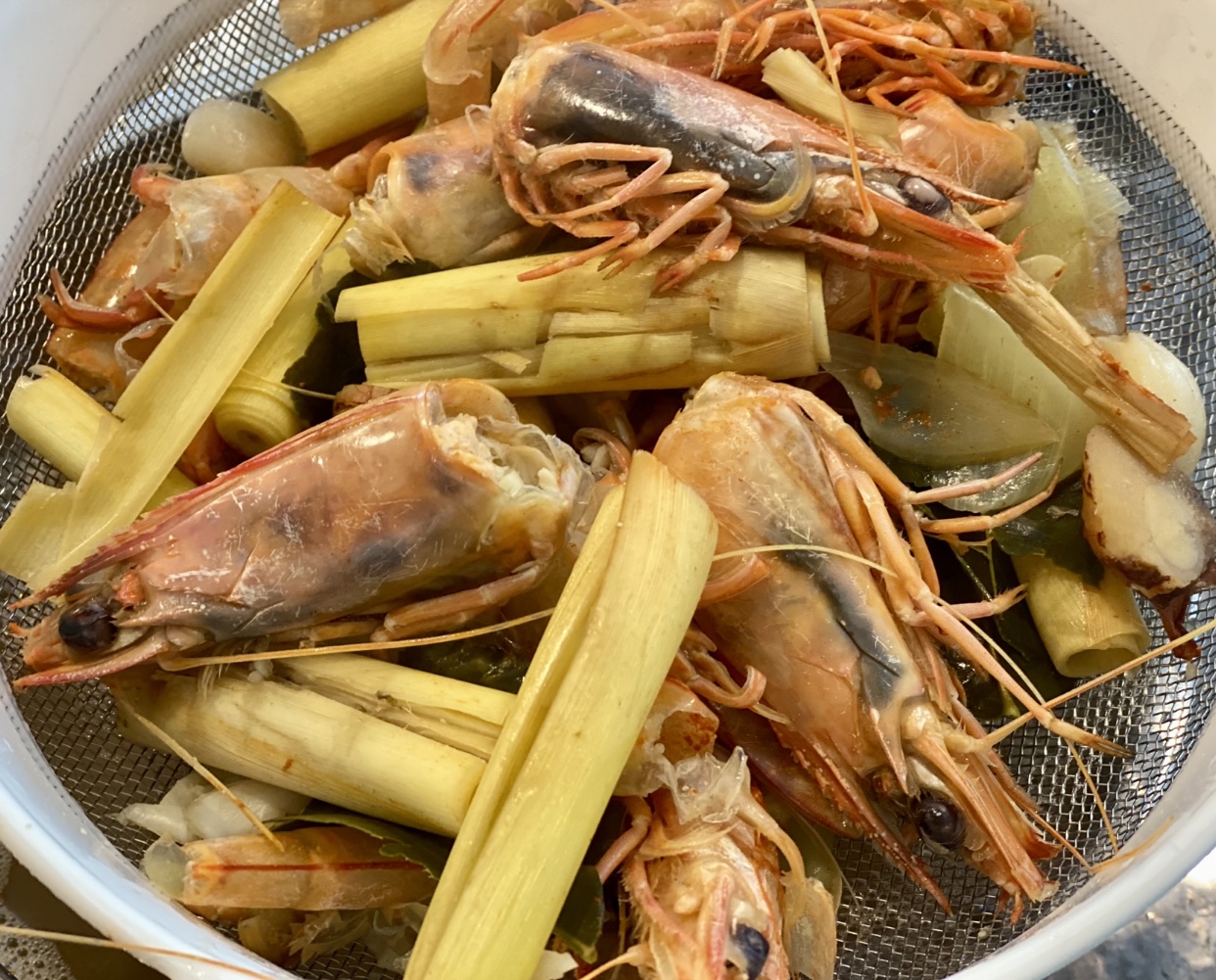
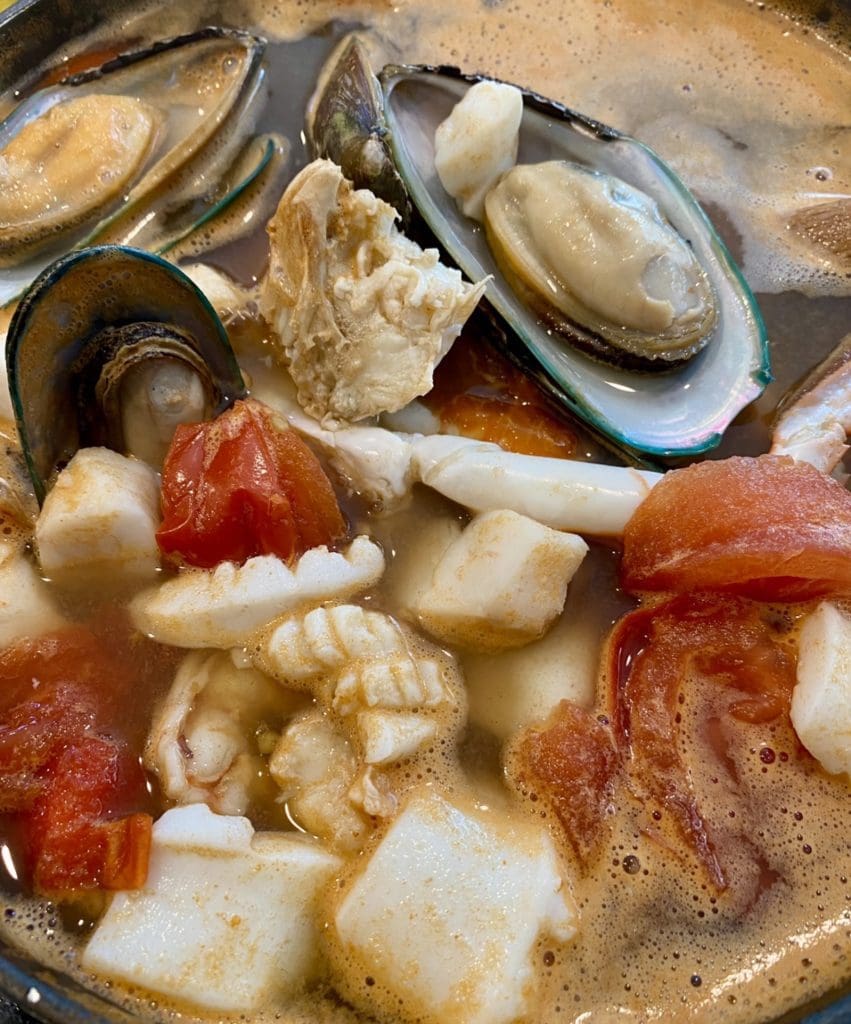
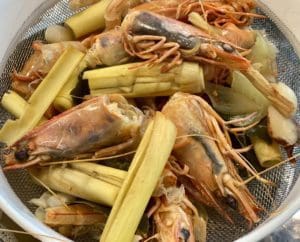
3. Once the soup comes to a boil, reduce the heat to low and cover the saucepan with a lid. Let it simmer gently for about 30 minutes to allow the flavours to develop. Using a large heatproof strainer, strain the broth into another large saucepan and discard the shells, aromatics and any solids.
4. Add the tomatoes, sugar and fish sauce to the strained broth and return it to medium-high heat. Once the soup reaches a boil, add the crab along with the peeled and any unpeeled prawns and cook for about 1 minute. Add the mussels, fish and squid, then cook for another minute. Reduce the heat to low and continue cooking for a further 5 minutes, or until the seafood is just cooked through.
5. Remove the saucepan from the heat and stir in the lime juice. Taste the soup and adjust the seasoning if needed by adding more sugar, salt or lime juice. Give it a final stir, then serve topped with fresh coriander.
Tips for the best Thai Seafood Soup
A classic Thai seafood soup should have a harmonious balance of heat, acidity and sweetness. The chilies provide the heat, lime juice adds sourness, and a small amount of sugar rounds out the broth. Taste the soup after adding the lime juice and adjust gradually until the flavours feel well balanced and vibrant.
Don’t overcook the seafood
Most seafood cooks quickly and needs only about a minute or two to cook through in the soup. Be careful not to overcook it, as the seafood can quickly turn rubbery and lose its delicate texture.
Use the seafood you love to eat
Aside from prawns, which are essential for flavouring the broth, choose the seafood you enjoy most. This instantly makes the soup more appealing. You can use scallops, clams, firm white fish, mussels, crab or squid, or a combination of your favourites.

Storage, reheating & making ahead tips
This Thai seafood soup is best enjoyed fresh, but it can be stored and reheated with a little care to preserve the flavour and texture of the seafood.
Can you store Thai Seafood Soup?
Yes, Thai seafood soup can be stored in an airtight container in the refrigerator for up to 2 days. Keep in mind that seafood is delicate, and the texture may soften slightly. For best results, store the soup as soon as it has cooled and reheat gently.
Best Way to Reheat Without Overcooking Seafood
To reheat Thai seafood soup, place it in a saucepan over low to medium heat and warm it gently until just heated through. Avoid boiling the soup, as this will overcook the seafood and make it tough. Stir occasionally and taste before serving, adjusting the seasoning with a little extra lime juice or fish sauce if needed.
Frequently Asked Questions
Is Tom Yum Talay spicy?
Tom Yum Talay has a noticeable level of heat, but the spice in this Thai seafood soup is easy to adjust. You can reduce the number of chillies or remove the seeds for a milder broth, or increase the heat by adding extra chillies or chilli paste to suit your taste.
Can I use frozen seafood?
Yes, frozen seafood works well in Thai seafood soup if it’s good quality. Thaw the seafood completely and pat it dry before adding it to the soup. Add frozen seafood towards the end of cooking to avoid overcooking and excess water diluting the broth.
What fish works best in Thai Seafood Soup?
Firm white fish works best in Thai seafood soup as it holds its shape during cooking. Good options include snapper, barramundi, cod and ling. Avoid delicate fish, as it can break apart in the broth.
More authentic tasting Thai dishes to try at home

Nutritional information has been calculated using a third-party application and should be used as an approximate guide only.
All cooking measurements are in Australian standard spoon and cup measurements.
I’d love to hear your thoughts and feedback on this post. If you’ve made this recipe, please consider showing your support by leaving a comment and rating the recipe. To help prevent spam, an email address is required, but it will not be published.
Cheers – Cat T
Thai Seafood Soup (Tom Yum Talay)

Ingredients
SEAFOOD
- 500g / 1.1lb raw prawns, with head and shells
- 1 raw blue swimmer crab, cleaned and cut into sections
- 8 Mussels, cleaned and debearded
- 150g / 5.3oz firm white fish, sliced into bite-sized pieces
- 100g / 3.5oz squid tube, scored and sliced into bite-sized pieces
FOR THE BROTH
- 6 cloves garlic, bruised
- 4cm / 1in galangal (NOTE 1)
- 4 stalks lemongrass, cut in half and bruised (NOTE 2)
- 12 kaffir lime leaves, roughly torn (NOTE 3)
- 3 small red chillies, sliced thinly
- 3 cups (750ml / 0.8 US qt) salt-reduced / low-sodium chicken stock (NOTE 4)
- 6 cups (1.5L / 1.6 US qt) water
- 2 ripe tomatoes, cut into wedges
- 1 small brown onion, peeled and cut into wedges
- 2 tsp sugar
- ½ cup (125ml / 4floz) fish sauce (NOTE 5)
- ½ cup (125ml / 4floz) fresh lime juice
- coriander / cilantro, to serve and garnish
Instructions
- Peel the prawns, leaving the tails intact, but do not discard the heads and shells, as they’re used to flavour the broth. Slice a shallow slit along the back of each prawn and remove the intestinal tract. Optional: For presentation, you can leave a few prawns unpeeled to place on top of the soup before serving.
- In a large saucepan, add the prawn heads and shells only (not the peeled prawns), along with the garlic, onion, galangal, lemongrass, kaffir lime leaves and chillies. Pour in the chicken stock and water, then place over medium heat and bring the broth to a boil.
- Once the soup comes to a boil, reduce the heat to low and cover the saucepan with a lid. Let it simmer gently for about 30 minutes to allow the flavours to develop. Using a large heatproof strainer, strain the broth into another large saucepan and discard the shells, aromatics and any solids.
- Add the tomatoes, sugar and fish sauce to the strained broth and return it to medium-high heat. Once the soup reaches a boil, add the crab along with the peeled and any unpeeled prawns and cook for about 1 minute. Add the mussels, fish and squid, then cook for another minute. Reduce the heat to low and continue cooking for a further 5 minutes, or until the seafood is just cooked through.
- Remove the saucepan from the heat and stir in the lime juice. Taste the soup and adjust the seasoning if needed by adding more sugar, salt or lime juice. Give it a final stir, then serve topped with fresh coriander.


Been looking for this recipe for such a long time. It’s marvellous, we were very impressed with the traditional flavours. Thanks for this recipe Catalina.
Hi Fiona,
You’re most welcome! I’m so happy you enjoyed the beautiful Thai flavours in this soup.