Lentils for Baby with Sweet Potato and Carrot
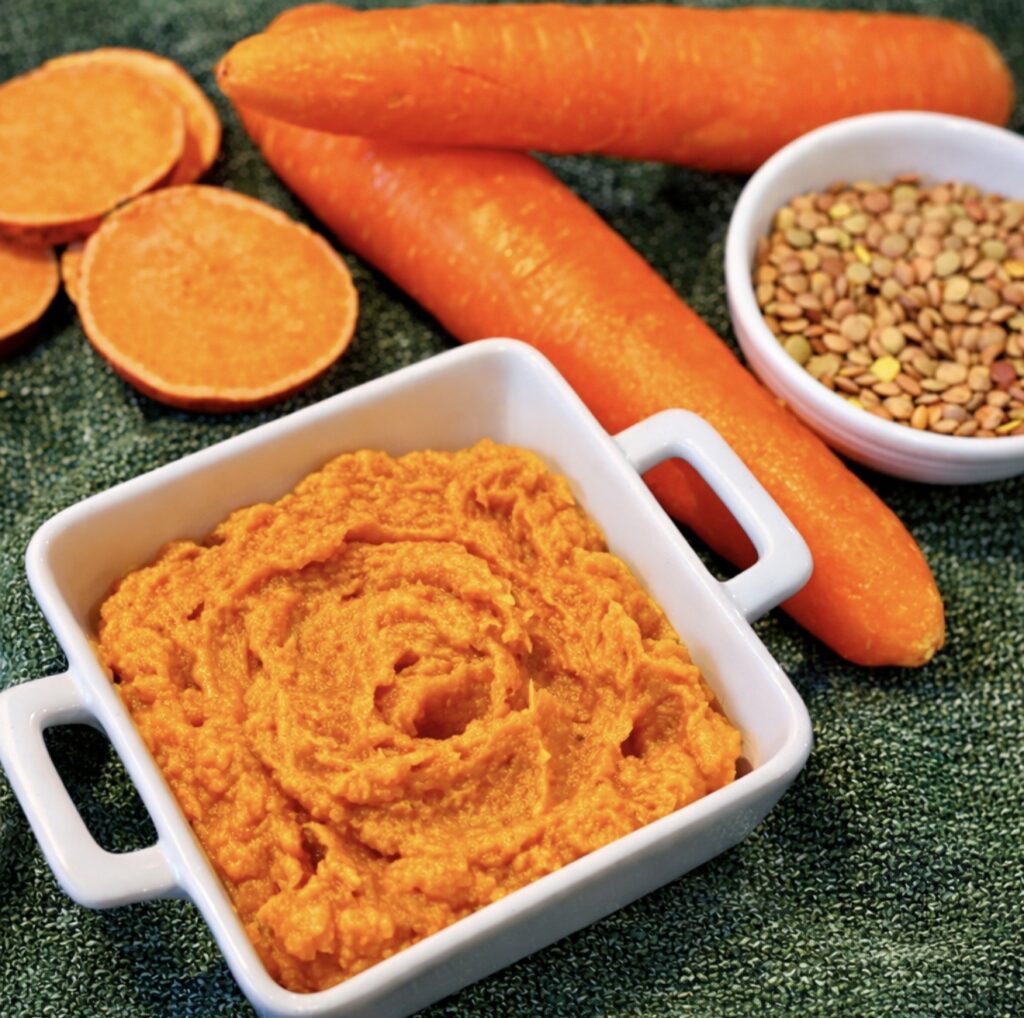
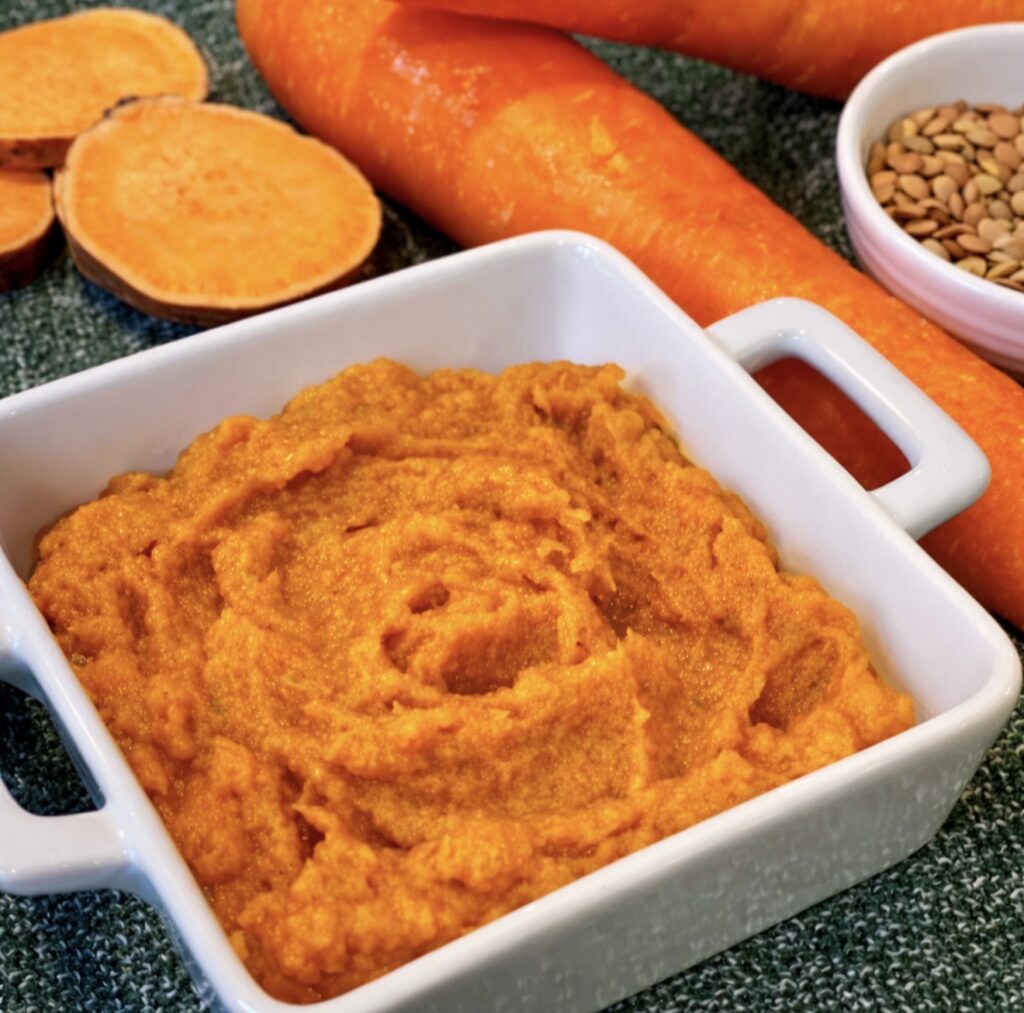
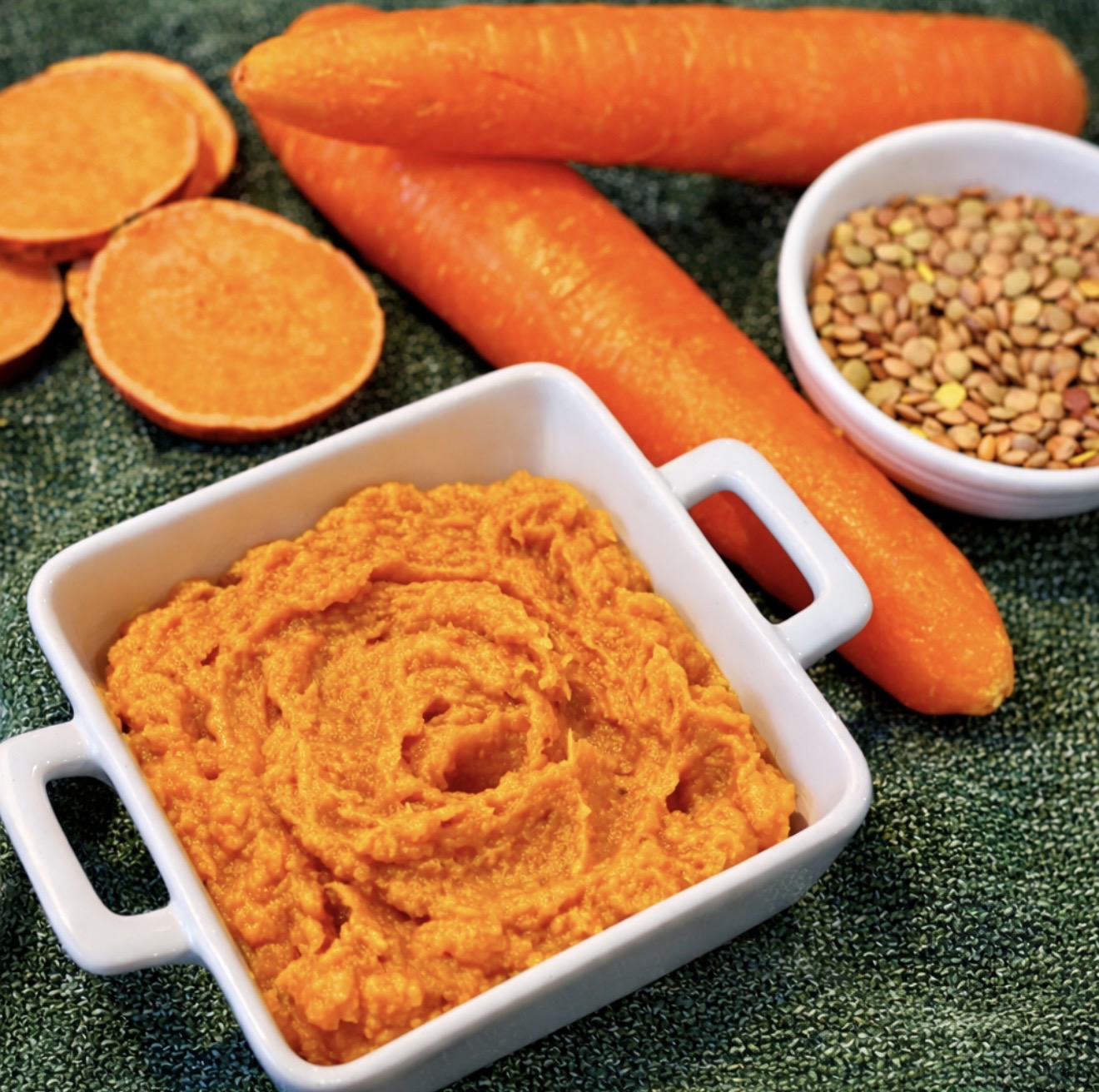
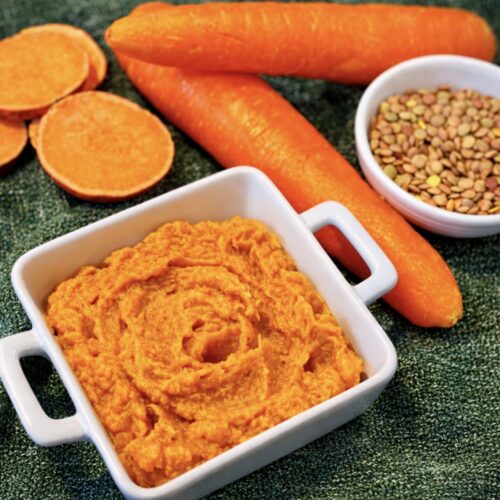
Steamed lentils for baby with sweet potato and carrot. A nutritious, freezer-friendly puree for busy parents and babies from 8 months
Updated 29 January 2026
This homemade Lentils for Baby recipe is something I am genuinely proud of developing. It really makes me feel like a good mum every time I feed this to my son.
I’ve only learned to love lentils in recent years. I’m not sure why it took me so long to appreciate them, but I’m glad I did because lentils are affordable, tasty, and incredibly nutritious.
Supermarkets do offer lentil-based snacks and ready-made meals for babies, but they’re often overpriced. I guess that’s the price we pay as overtired, busy parents, paying extra for convenience.
Thanks to my thrifty parents, I’m always mindful of saving money, which is why I always keep inexpensive cans and dried packets of lentils in my pantry.
Lentils are naturally low in fat and rich in plant fibre and protein, helping keep little tummies full for longer. They’re also packed with essential vitamins and minerals such as iron, folate, and potassium, which are important for growing babies.
I wanted to introduce lentils into Kai’s diet as soon as he turned 8 months old. His first taste was a store-bought Rafferty’s Garden pouch made with lentils, carrot, and sweet potato.
I had my doubts he would accept it, but he loved it, so I thought to myself, why not make a big batch of this at home?
This lentils for baby recipe with sweet potato and carrot has since become a staple in our freezer. It allows me to relax and feel confident knowing his food isn’t mass-produced, that it’s made with love, and that I know exactly what goes into every spoonful.
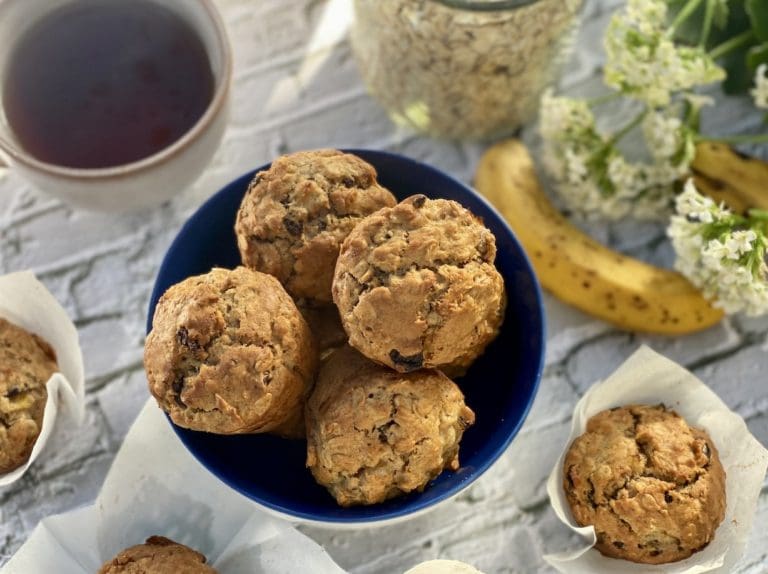
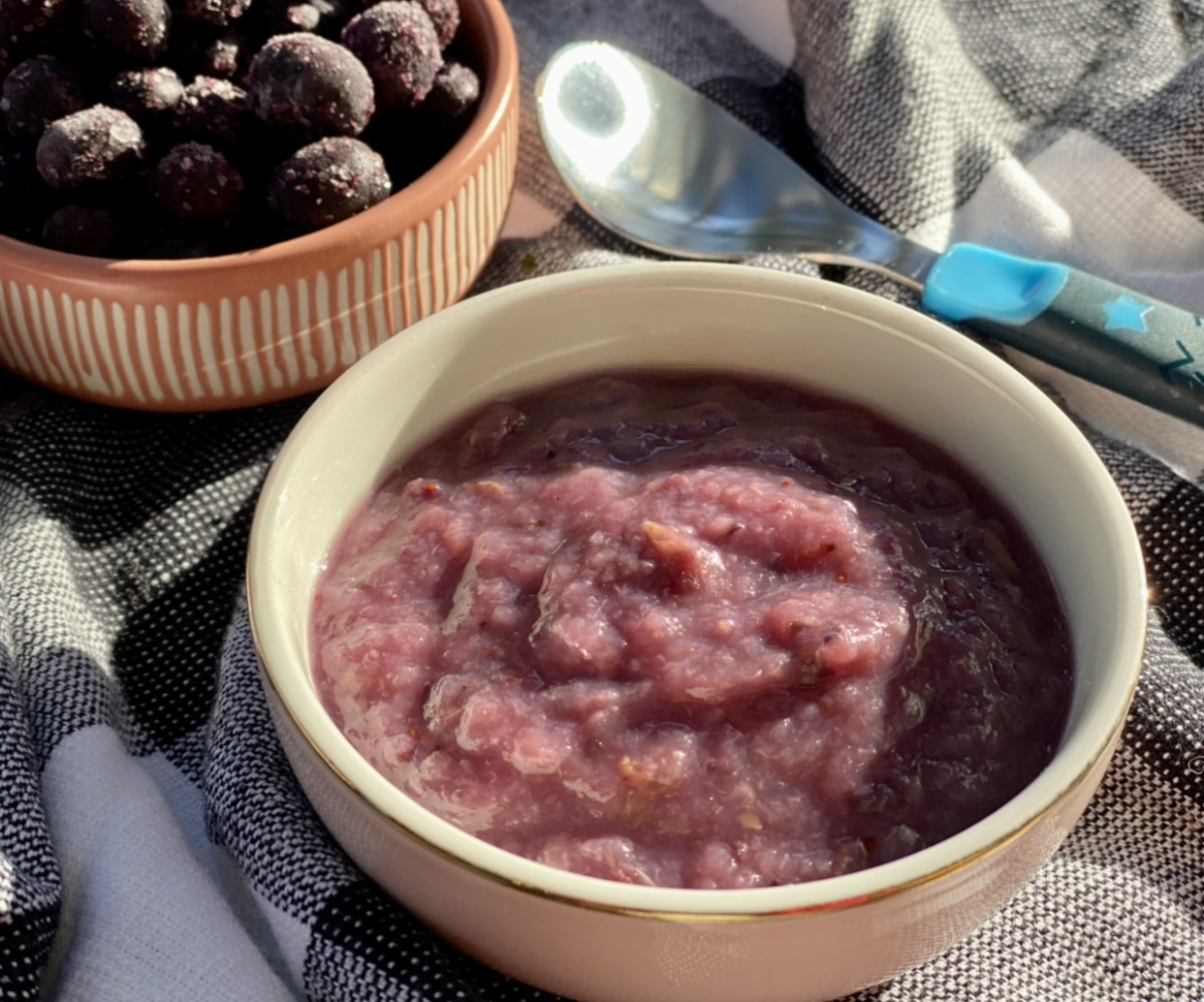
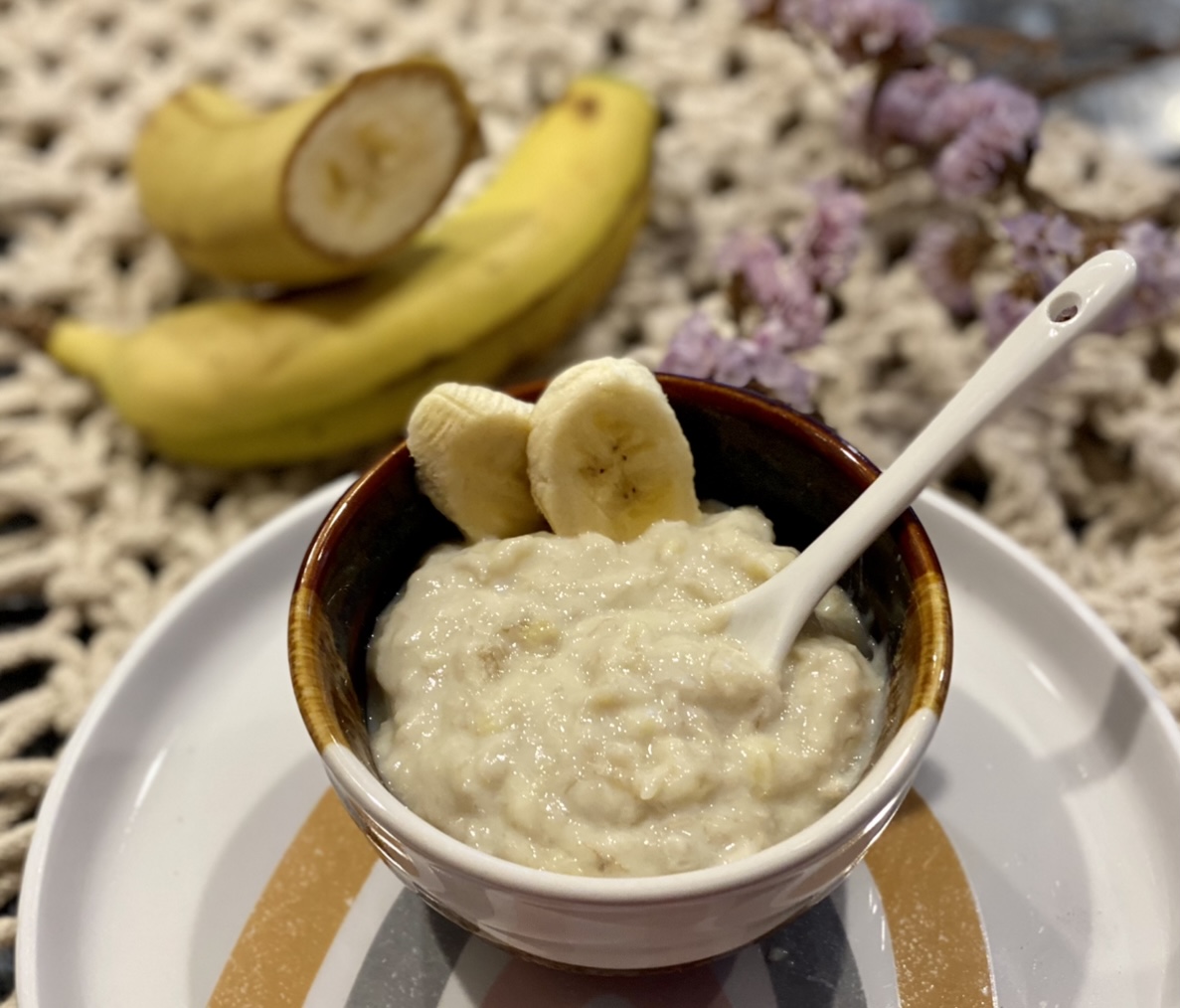
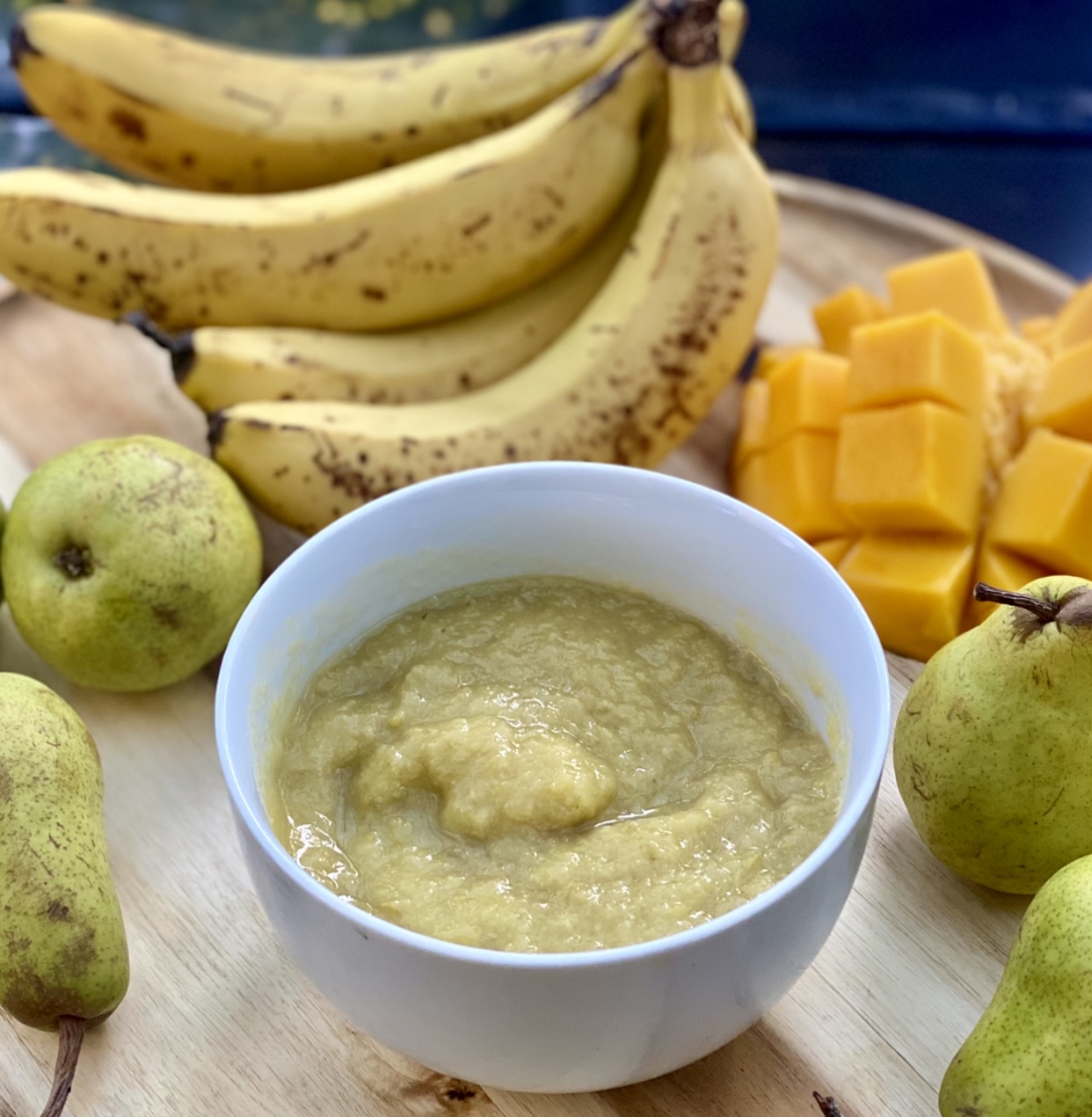
Same goes for my other baby recipes like Prune and Pear Puree and No-added sugar Banana Oat Cookies
Why you’ll love this Lentils for Baby recipe
Steamed, not boiled
Steaming the vegetables in this recipe instead of boiling them helps retain more nutrients and natural flavour. Steaming also keeps the texture soft and perfect for blending into a smooth, baby-friendly puree.
Convenient and realistic for busy parents
This recipe uses affordable canned lentils, making it quick and practical to prepare, especially on busy days. It’s a simple way to get a nutritious meal on the table without spending hours in the kitchen.
Naturally nutritious and filling
Lentils are rich in plant-based protein and fibre, helping to keep babies full for longer. They’re also packed with important nutrients such as iron, folate, and potassium, which support healthy growth and development.
The addition of sweet potato and carrot provides extra goodness while naturally sweetening the puree, making it more palatable for babies.
Perfect texture for babies
Once blended, this lentils for baby recipe becomes smooth, making it suitable for babies from around 8 months who are comfortable with purees.
Freezer-friendly and budget-conscious
This recipe is ideal for batch cooking and freezing, giving you homemade baby food ready whenever you need it. It’s made with simple, affordable pantry ingredients, so it’s easy on both time and budget.
Are lentils good for babies?
Yes, lentils are very good for babies when prepared correctly and offered at the right stage. They are naturally rich in plant-based protein and fibre, helping support healthy growth while keeping babies full for longer.
Lentils are also an excellent source of important nutrients such as iron, folate, and potassium, which are especially important during infancy when babies’ nutritional needs are high.
When combined with vegetables like sweet potato and carrot, lentils become even more gentle and balanced for young digestive systems.
Lentils should always be well-cooked and blended or mashed to an appropriate texture to reduce the risk of choking and support easy digestion.
When can babies eat lentils?
Babies can usually start eating lentils from around 8 months of age. Every baby develops at their own pace, so readiness is always more important than age alone.
If you’re unsure about introducing new foods, it’s always a good idea to check with your baby’s nurse or doctor for personalised advice.
At this stage, lentils should be fully cooked, soft, and blended into a smooth puree or well-mashed to suit your baby’s feeding ability. For safety, lentils should always be served in an age-appropriate texture.
You can easily adjust the consistency by adding water or breast milk for younger babies, or leaving the mixture slightly mashed for older babies who are ready for thicker textures.
Ingredients you’ll need
Lentils
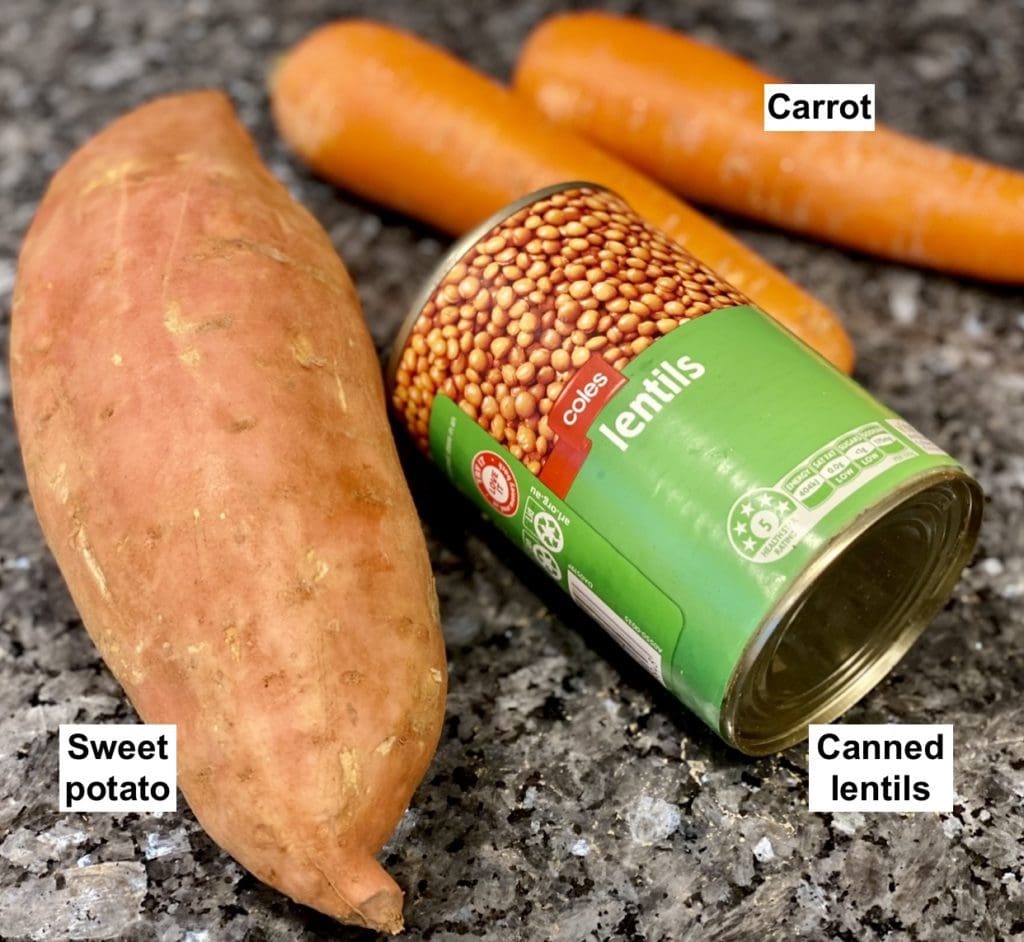
For convenience, I used precooked lentils from a tin. Some supermarkets offer organic and no-salt-added canned lentils, which are better choices for babies between 8 to 18 months of age. If you prefer to use dried lentils, simply follow the instructions on the packet and, most importantly, make sure the lentils are fully cooked, soft, and easily mashable before blending.
Sweet Potato
For this recipe, I used orange sweet potato because its texture is naturally softer and easier to mash. You can also use other varieties such as purple, Hawaiian, or Japanese sweet potatoes, but you may need to adjust the cooking time and ensure they are fully cooked and soft. These varieties tend to have less moisture, so you may need to add a little water or breast milk to loosen the puree.
Boiled water or breast milk

For younger babies, you may prefer to use breast milk to loosen the puree to the right consistency. Alternatively, boiled water works just as well. Add one tablespoon at a time, blending between each addition, until you reach a texture that suits your baby’s age and feeding stage.
How to make Lentils for Baby
Step-by-step guide with photos
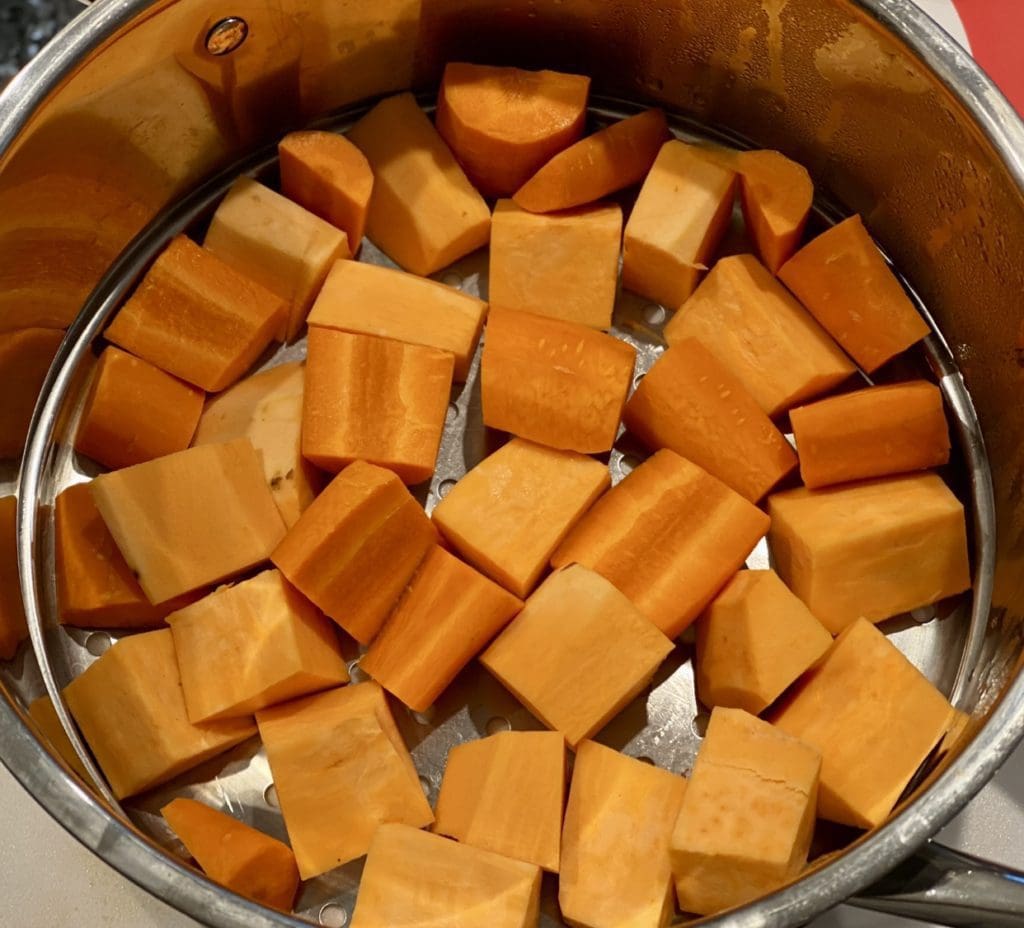
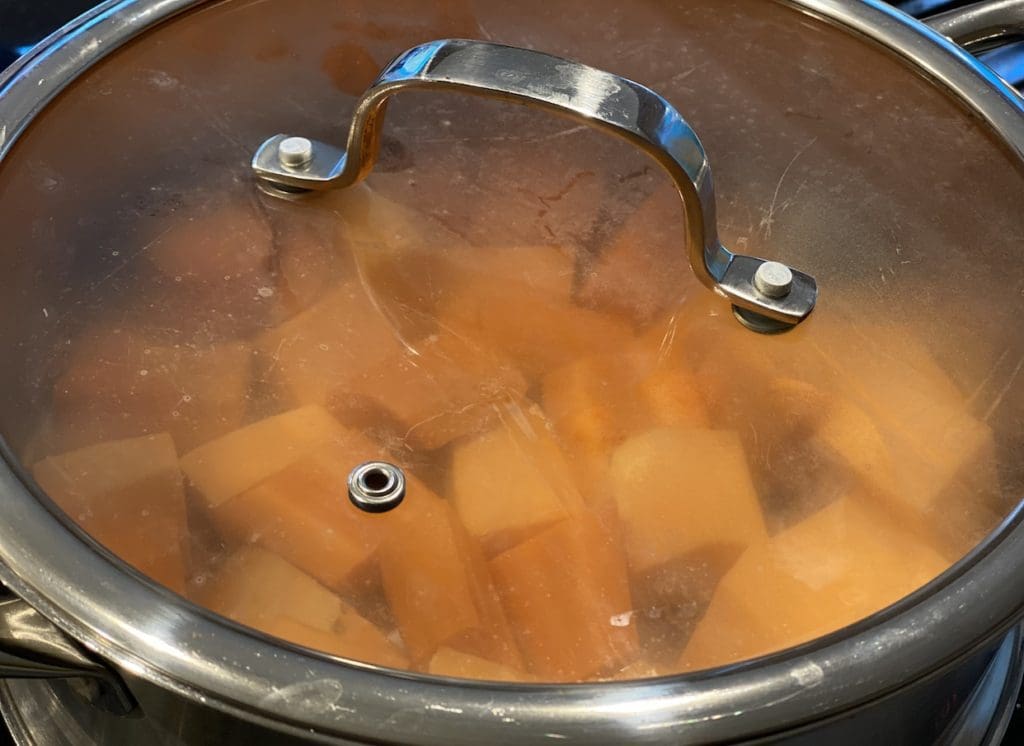
1. Fill a large saucepan fitted with a steamer attachment with water until it is about one-third full. Place the saucepan on high heat, without the steamer attached, and bring the water to a rapid boil.
2. While the water is heating, prepare the vegetables. Peel the sweet potato and carrots, then chop them into large, evenly sized chunks so they steam at the same rate.
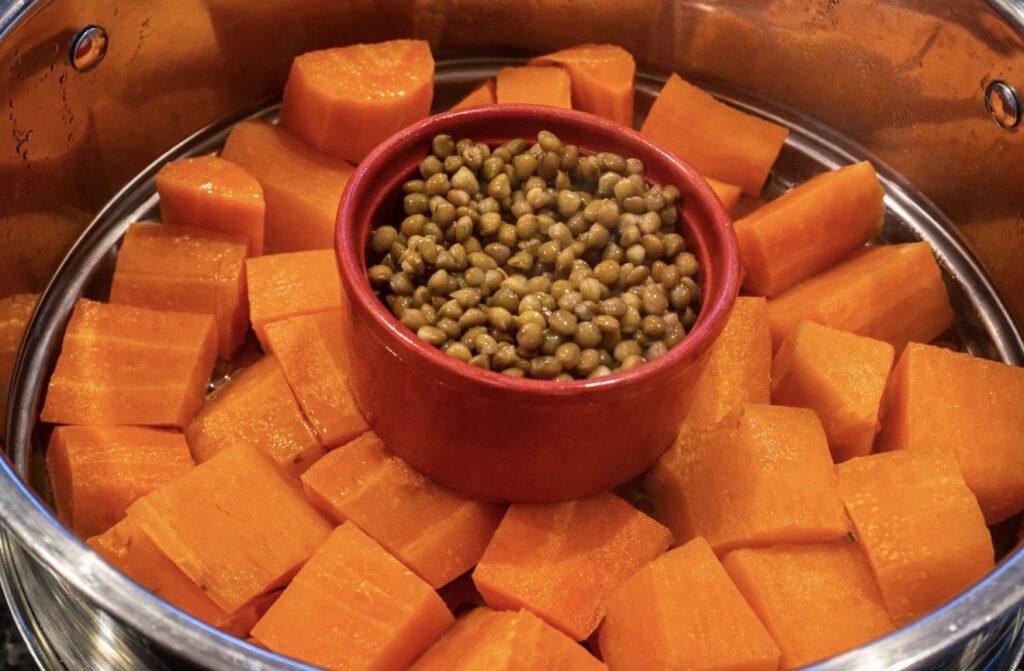
3. Once the water has reached a rolling boil, reduce the heat to medium-high. Place the sweet potato and carrot into the steamer basket, attach it over the saucepan, and cover with a lid. Steam the vegetables for about 15 minutes, or until they are very soft and easily pierced with a fork.
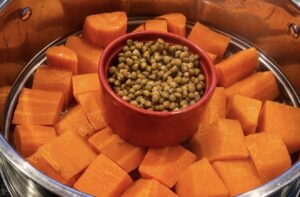
4. Drain the lentils in a colander and rinse them under cold water a few times. Transfer the lentils to a small heatproof bowl and place the bowl on top of the vegetables inside the steamer. Cover with a lid and steam for a further 5 minutes.
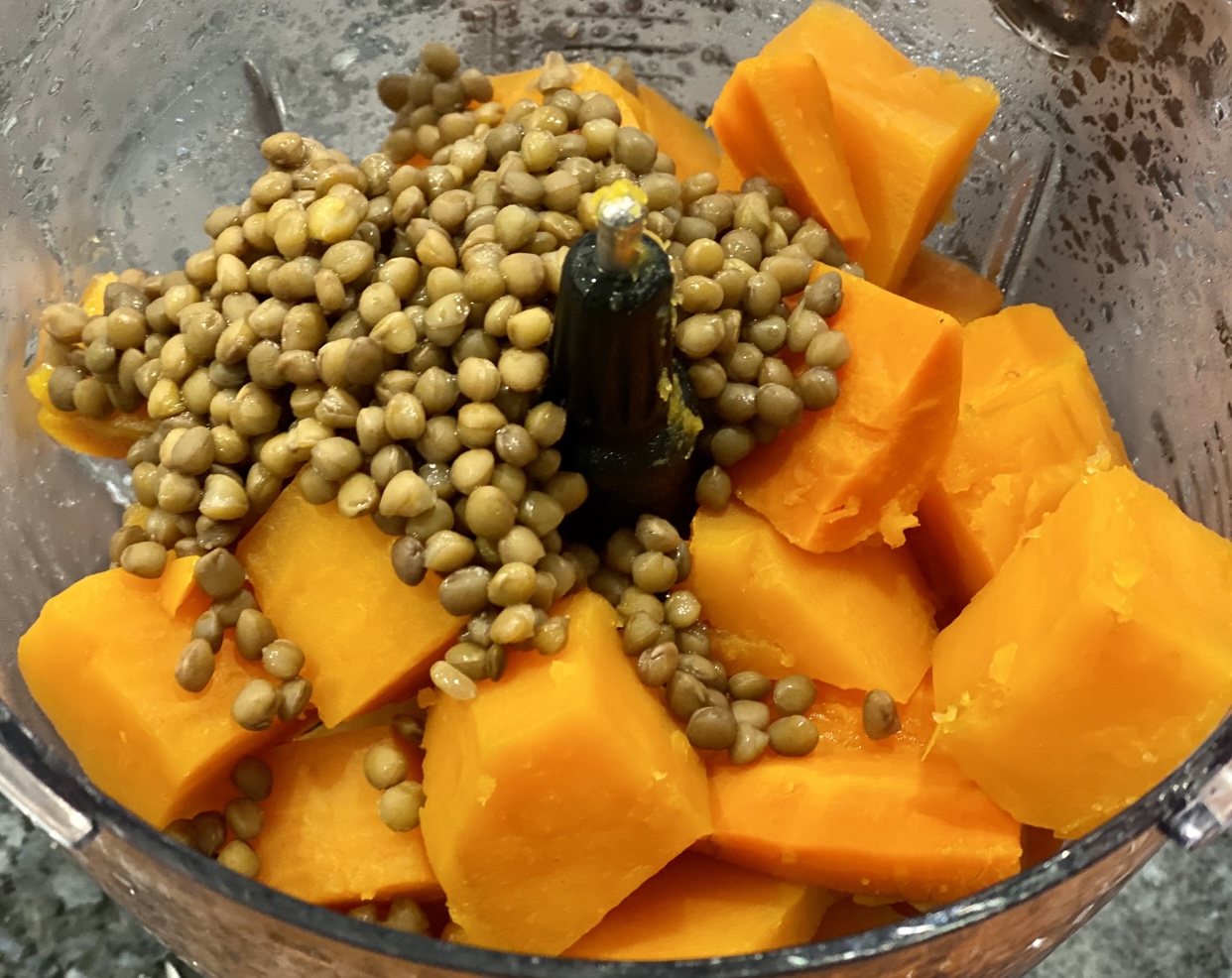
5. Using a tea towel, carefully remove the bowl of lentils from the steamer and spoon out the vegetables. Allow to cool for 5 to 10 minutes.
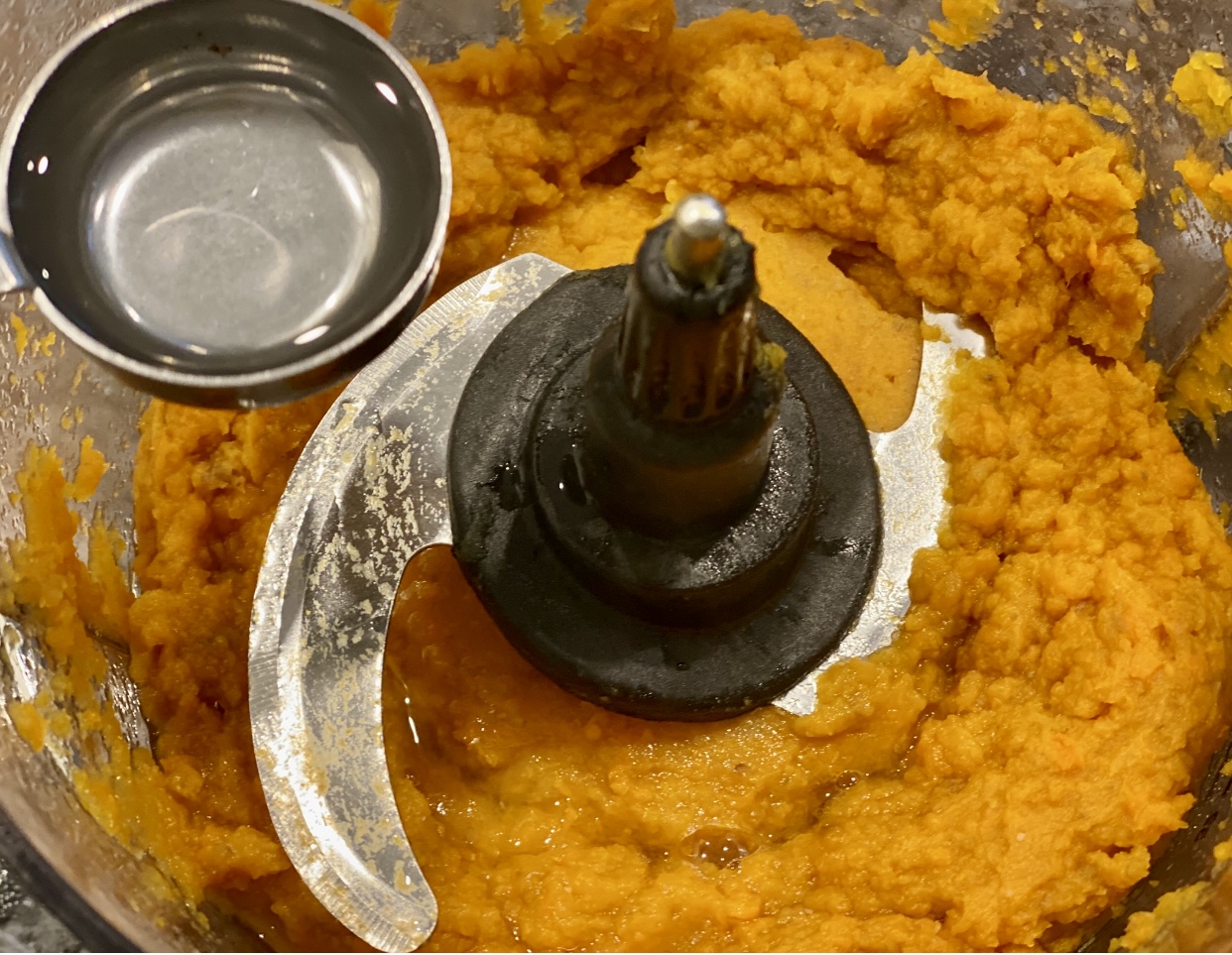
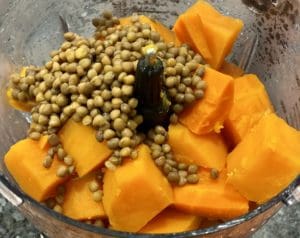
6. Transfer the steamed carrots and sweet potato to a food processor, then add the lentils. Process on medium-high speed until the mixture reaches a thick mashed potato consistency.
7. For younger babies, you may prefer to use breast milk to loosen the puree to the right consistency. Alternatively, boiled water works just as well. Add one tablespoon at a time, blending between each addition, until you reach a texture that suits your baby’s age and feeding stage.
Storage, freezing, and reheating
Storage: Allow the lentils and vegetable puree to cool completely at room temperature before storing. Once cooled, transfer the puree into an airtight container and store it in the fridge for up to 2 days.
Freezing: This lentils for baby puree is also freezer-friendly, making it ideal for batch cooking. Spoon the cooled puree into baby containers, then freeze. Once frozen, transfer the portions to a labelled freezer bag or container and store in the freezer for up to 2 months.
For more detailed tips, you can read my full guide on How To Store Homemade Baby Food
To reheat: Thaw the puree overnight in the fridge or gently warm it using a microwave. Always stir well and check the temperature before serving to your baby. If the puree thickens after freezing, simply loosen it with a little boiled water or breast milk until you reach the desired consistency. Do not refreeze leftovers once reheated.
Frequently Asked Questions
Are canned lentils safe for babies?
Yes, precooked soft canned lentils are safe for babies when you choose varieties with no added salt. Always rinse canned lentils well under water and ensure they are cooked through.
Can I boil the vegetables instead of steaming them?
Yes, you can boil the vegetables if needed, but steaming helps keep more nutrients and flavour. You can also use some of the cooking water to help thin the puree if needed.
Can lentils cause gas in babies?
Lentils may cause mild gas in some babies, particularly when first introduced. Offer small amounts at first. Combining lentils with gentle vegetables like sweet potato and carrot can also aid digestion.
Can babies eat lentils every day?
Lentils can be offered regularly, but they’re best included as part of a varied diet. Rotating lentils with other protein-rich foods helps ensure balanced nutrition and supports healthy eating habits.
Are lentils a good source of iron for babies?
Yes, lentils are a good plant-based source of iron, which is important for growth and development. Serving lentils with vitamin C–rich vegetables like sweet potato or carrot can help support iron absorption.
More healthy baby and toddler food
An important note
My baby recipes are based on what I fed my son as a mum, following advice from community nurses at the time and my research. Please note that any age guides or food suggestions shared here are not professional or medical advice. Every baby is different, so please use your own judgement or speak with your baby’s nurse or doctor if you have any concerns before introducing new foods.
Nutrition Information
Nutrition information is estimated using a third-party calculator and should be used as a guide only.
Australian Measurements
All measurements on this website use Australian standard cups and spoons. For conversion details, see my Australian Cooking Measurements page.
I’d love your feedback!
If you made this recipe, please leave a star rating and comment below; it really supports my blog and helps others find the recipe. Your email address is required to comment (to prevent spam) but will not be published. If you share your dish on Instagram, don’t forget to tag me. I’d love to see it! @3catsfoodie
Cheers – Cat T
Lentils for Baby with Sweet Potato and Carrot

Ingredients
- 500g / 1.1lb sweet potato, peeled and roughly chopped (NOTE 1)
- 300g / 11oz carrot, peeled and roughly chopped
- ½ cup of drained and rinsed canned lentils (NOTE 2)
- 1 to 3 tbsp boiled water or breast milk (NOTE 3)
Instructions
- Fill a large saucepan fitted with a steamer attachment with water until it is about one-third full. Place the saucepan on high heat, without the steamer attached, and bring the water to a rapid boil.
- While the water is heating, prepare the vegetables. Peel the sweet potato and carrots, then chop them into large, evenly sized chunks so they steam at the same rate.
- Once the water has reached a rolling boil, reduce the heat to medium-high. Place the sweet potato and carrot into the steamer basket, attach it over the saucepan, and cover with a lid. Steam the vegetables for about 15 minutes, or until they are very soft and easily pierced with a fork.
- Drain the lentils in a colander and rinse them under cold water a few times. Transfer the lentils to a small heatproof bowl and place the bowl on top of the vegetables inside the steamer. Cover with a lid and steam for a further 5 minutes.
- Using a tea towel, carefully remove the bowl of lentils from the steamer and spoon out the vegetables. Allow to cool for 5 to 10 minutes.
- Transfer the steamed carrots and sweet potato to a food processor, then add the lentils. Process on medium-high speed until the mixture reaches a thick mashed potato consistency.
- For younger babies, you may prefer to use breast milk to loosen the puree to the right consistency. Alternatively, boiled water works just as well. Add one tablespoon at a time, blending between each addition, until you reach a texture that suits your baby’s age and feeding stage.