Massaman Curry (easy rice cooker recipe)
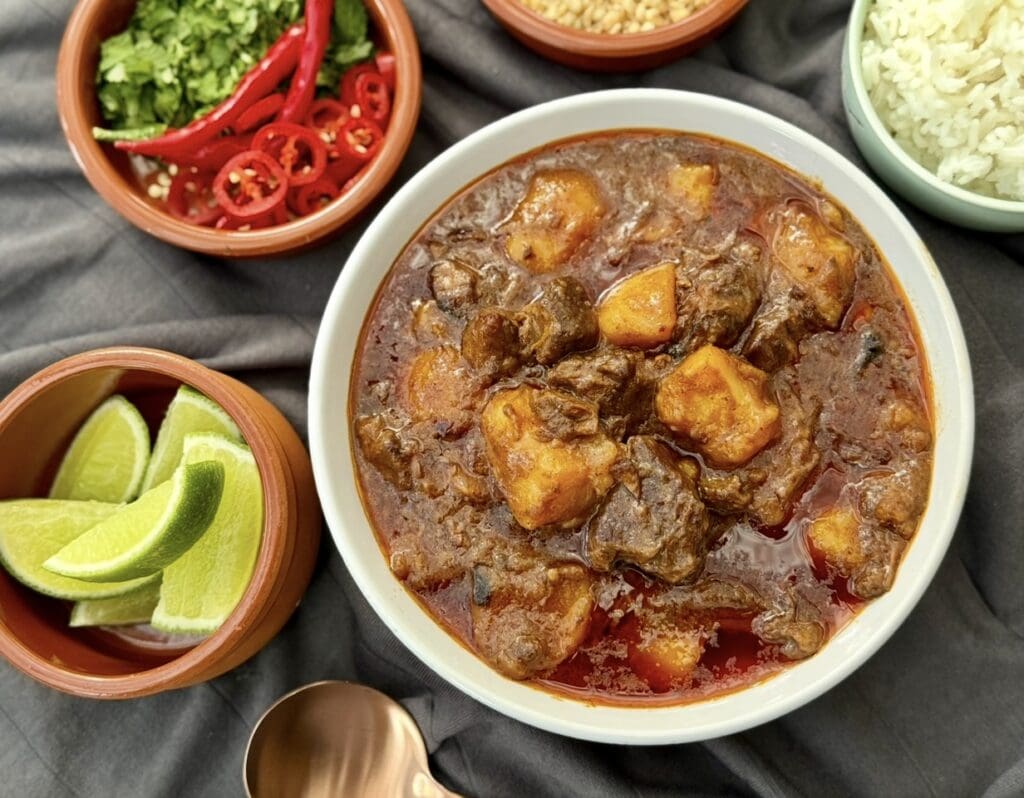
Make your fave Thai beef curry and potatoes at home using a rice cooker. This Massaman Curry recipe is easy and tasty, guaranteed to impress
Another exciting rice cooker recipe!
It just hit me… I don’t have a traditional slow cooker! Great, as a kitchen appliance addict, I must get one. Actually, this will have to wait, since I have absolutely no space left in my kitchen! Luckily for me, last year I took the plunge and got a multi-function rice cooker. It does a fantastic job with slow cooking, and I actually prefer using it over my heavy Le Creuset cast iron!
Since my last Claypot Chicken Rice rice cooker recipe was quite popular, it motivated me to test more recipes using my rice cooker. Let’s just say some recipes I attempted were underwhelming ?
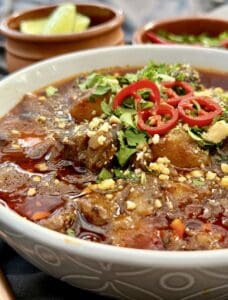
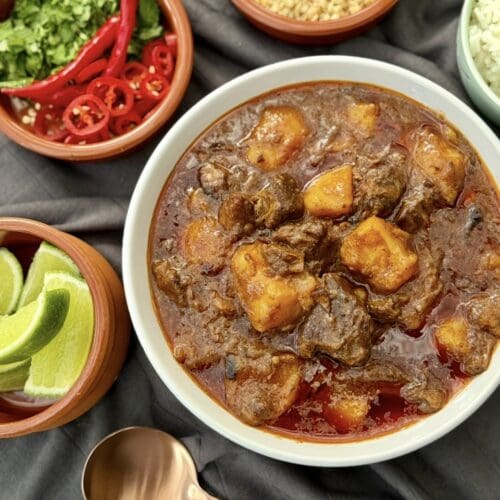
After a few trials and tweaks, I’m happy to present to you this Thai Massaman curry recipe! It’s a simple shortcut version, but the taste is authentic, and the results far exceeded my expectations. Two hours later, my rice cooker gifted me with the most beautiful-looking, aromatic Massaman curry!
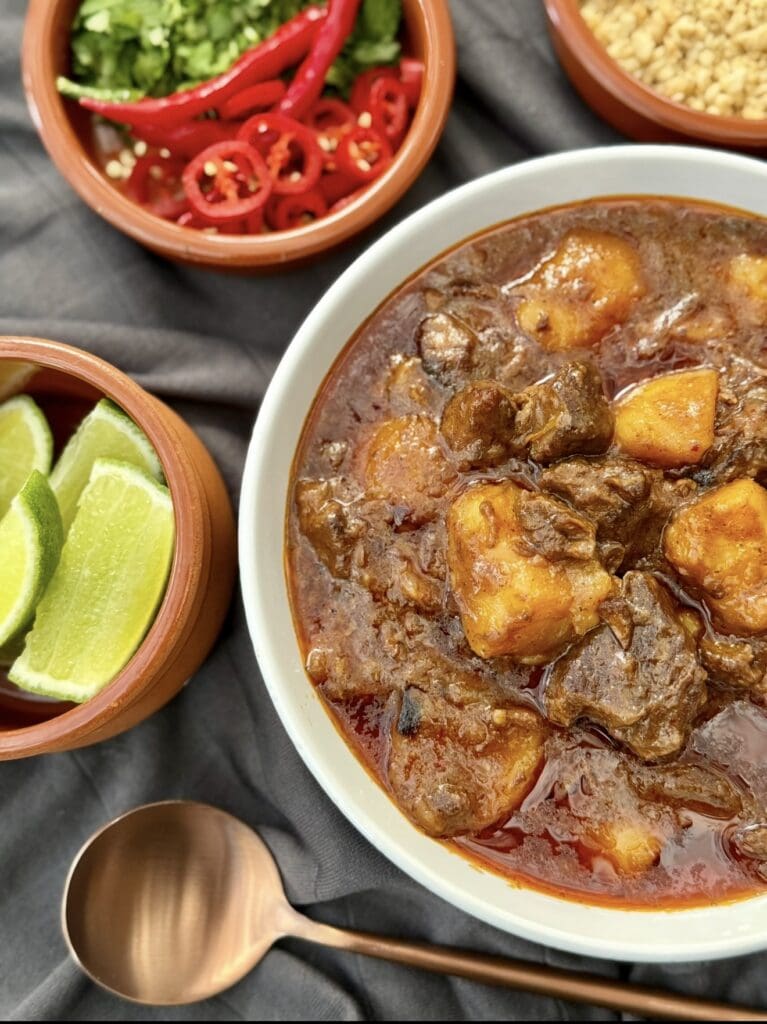
Massaman curry has distinct Indian and Malay flavours, but it still tastes like Thai cuisine. This might seem confusing to some, but trust me, it works! Massaman curry’s global popularity can vouch for that. It’s easy to see why with melt in your mouth tender beef and potatoes cooked in a rich aromatic coconut-based curry with warm spices. Richly flavourful and intensely savoury!
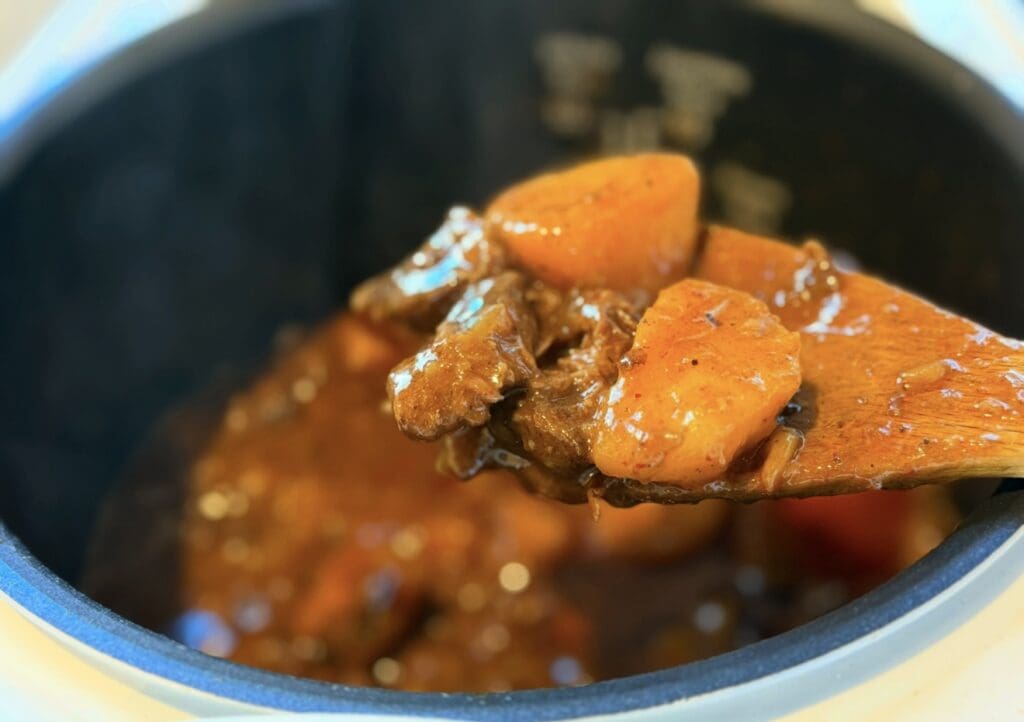
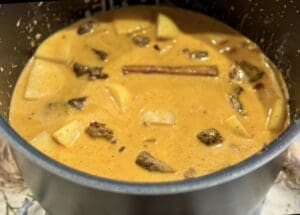
Just look at the deep colour of that curry! I can’t believe we have ‘pecah minyak’ happening here just by using a rice cooker and store-bought curry paste! In Malay cooking, pecah minyak occurs when oil separates, showing that the fried spice paste is cooked and flavourful.
Rice cooker Massaman Curry
What is Thai massaman Curry?
Thai Massaman Curry is a rich Thai curry influenced by Indian and Malay cuisine but still has Thai flavours too. It’s coconut-based and comprises warm spices, potatoes, and this version uses beef as a protein, but it can also be made with lamb or chicken. Massaman curry has a slightly sweet and complex savoury flavour profile.
What is the best cut of beef for massaman curry?
The best cut of beef for massaman curry is typically boneless beef chuck or beef brisket. These cuts have a good amount of marbling and connective tissue, which helps them become tender and flavourful when slow-cooked in the rich and aromatic massaman curry sauce.
What if I don’t have a rice cooker?
This is essentially a slow-cooker recipe. I used a Panasonic 10-cup rice cooker, so it holds quite a bit (not sponsored) and has a slow cooker function. If you don’t have a large enough rice cooker or slow cooker mode on your rice cooker, you can just make this with a Dutch oven / cast-iron casserole pot. I’ve included these cooking methods in my recipe.
Is massaman curry spicy?
Answering this is always tricky since heat tolerance varies among people. With this recipe, the spiciness will vary depending on the Massaman curry paste you use. I used Maesri’s Masaman paste (not sponsored) from Thailand, which I believe makes the most authentic curry pastes. Let’s say the heat level is medium. I wouldn’t say mild, but it is for me because I love spicy dishes.
Which potatoes are ideal for slow cooking?
Waxy potatoes are good for slow cooking because they have a lower starch content and a higher moisture content than other potato types. This means they hold their shape better and don’t become mushy during long cooking times. Waxy potatoes include: Kipfler, Dutch Cream, Red Bliss, Fingerling, New Potatoes, Charlotte, Maris Peer and Jersey Royal.
More mouthwatering curry recipes to try:
Ingredients for Rice cooker Massaman Curry
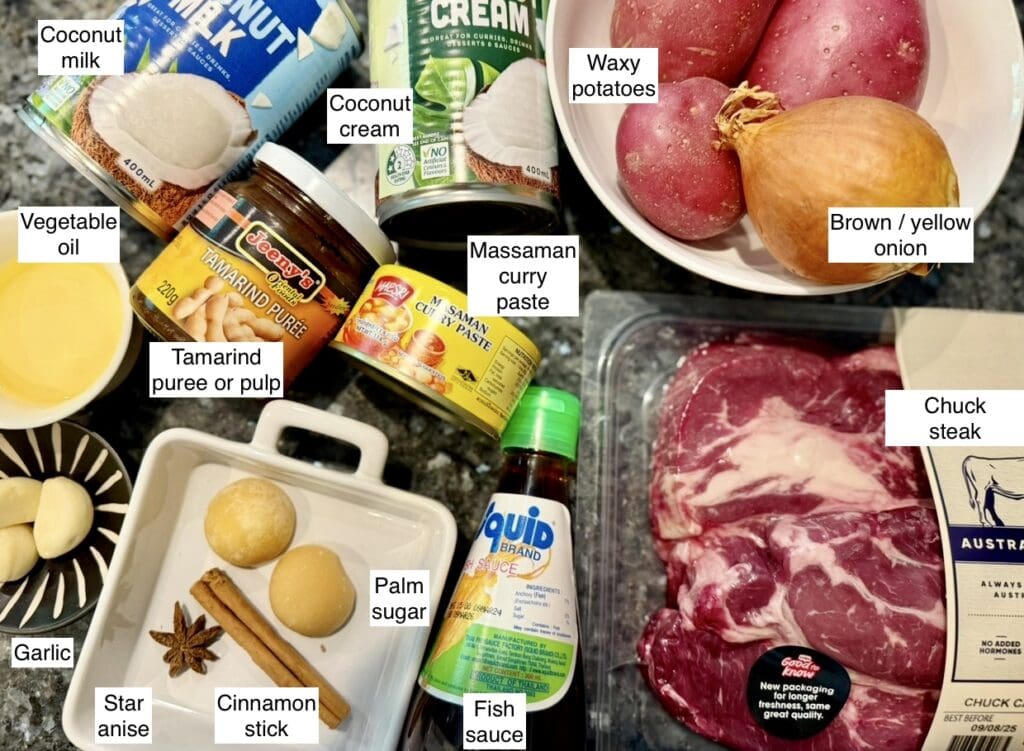
Chuck steak is a cut of beef from the chuck primal, in the shoulder area. It’s a flavourful but tough cut, often used for braising, stews, or pot roasts because of its rich marbling that tenderises during slow cooking. You could also use beef brisket, which has similar richness and tenderness.
Massaman curry paste is a blend of dried red chili peppers, lemongrass, galangal, garlic, shallots, and various spices. I used Maesri’s masaman paste, which comes in a small tin. It’s affordable and very good quality paste imported from Thailand.
Canned Coconut – Coconut cream has a higher fat content and thicker consistency than coconut milk. I used one can of cream and milk to balance it out, but if you want a lighter curry, just use two cans of coconut milk. Don’t use two cans of coconut cream or the curry will be too oily.
Palm sugar comes from coconut palm sap, so they don’t cut down the trees, making it sustainable. Check the label to be sure it’s pure or 100% palm sugar. If you don’t have palm sugar, you can replace it with an equal amount of brown sugar.
Waxy potatoes hold their shape better during long cooking times because of their lower starch content, preventing them from disintegrating and creating a mushy texture in slow-cooked dishes. Waxy potatoes include: Kipfler, Dutch Cream, Red Bliss, Fingerling, New Potatoes, Charlotte, Maris Peer and Jersey Royal.
Fish sauce – My favourite brand is ‘Squid’ fish sauce from Thailand, but any brand of fish sauce would work. Despite its strong fish odour, fish sauce imparts a distinctive savoury taste to dishes. You should be able to pick up a bottle at the supermarket or at an Asian grocer.
Tamarind puree or pulp has a tangy and slightly sweet flavour. You can buy tamarind in various forms: whole pods, pressed blocks or concentrates, pulp, and powder. I like to use the puree or pulp that comes in the jar as it’s hassle-free!
Subscribe to 3CatsFoodie’s FREE Newsletter

For the latest recipes and other fun stuff!
How to make rice cooker Massaman Curry
Step-by-step guide with photos
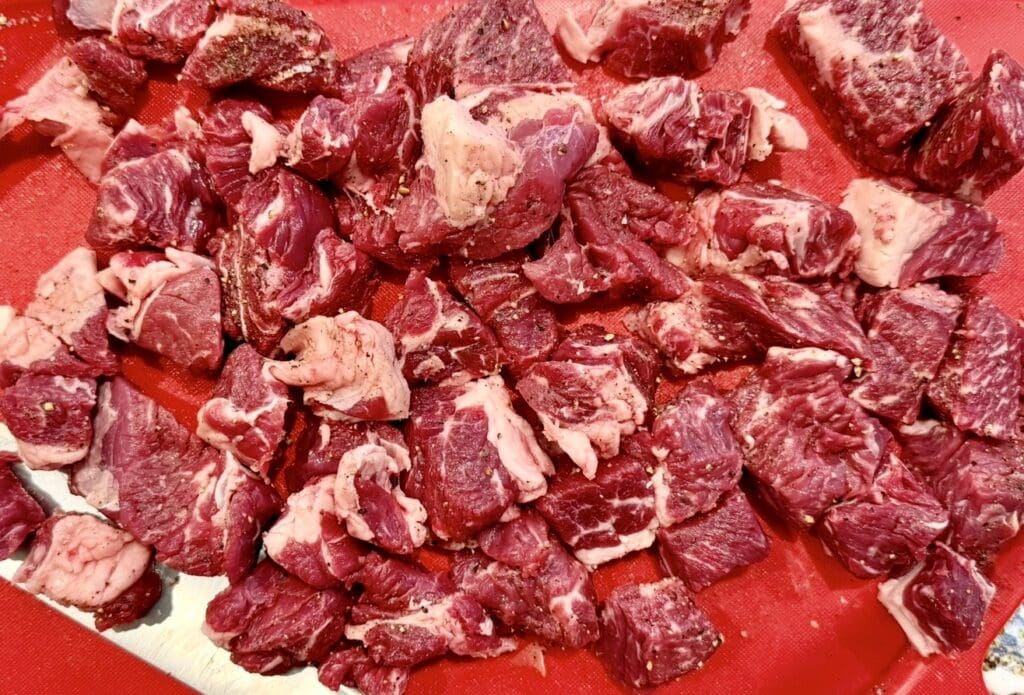

Season the steaks all over with salt and pepper. Remove some of the fat around the meat, but leave some to help tenderise the beef. Cut the steak into roughly 2.5cm / 1-inch chunks.
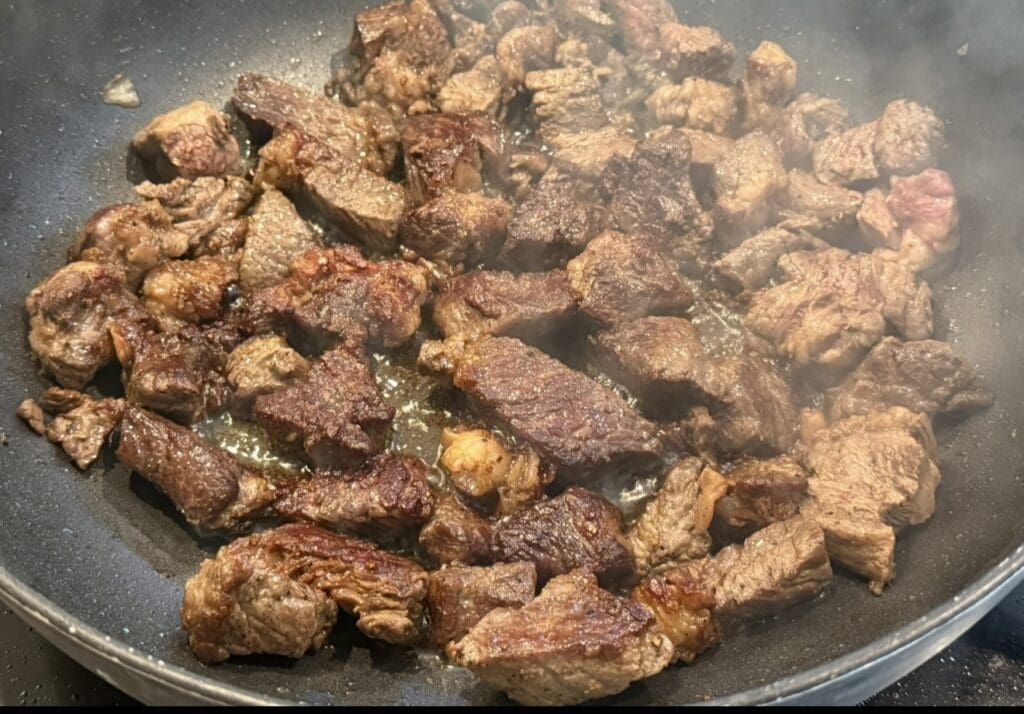
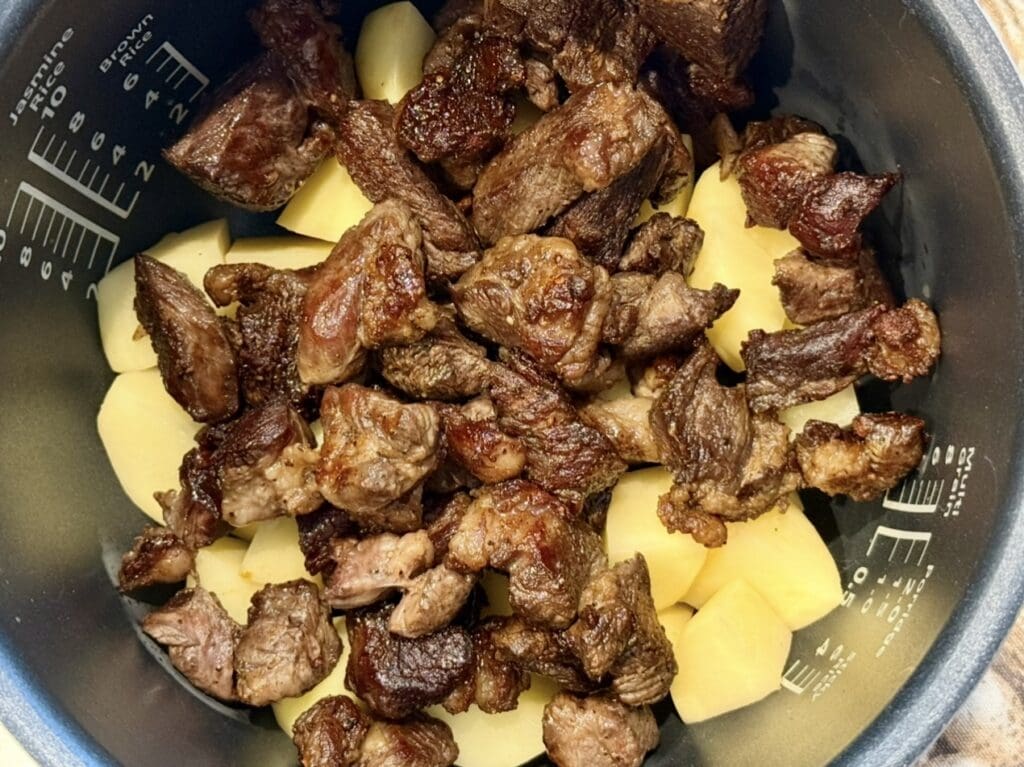
Heat oil in a large frying pan over high heat, then brown the meat on each side for 2 or 3 minutes or until a crust forms. You may need to do this in batches. Transfer the beef onto a plate and set aside for later.
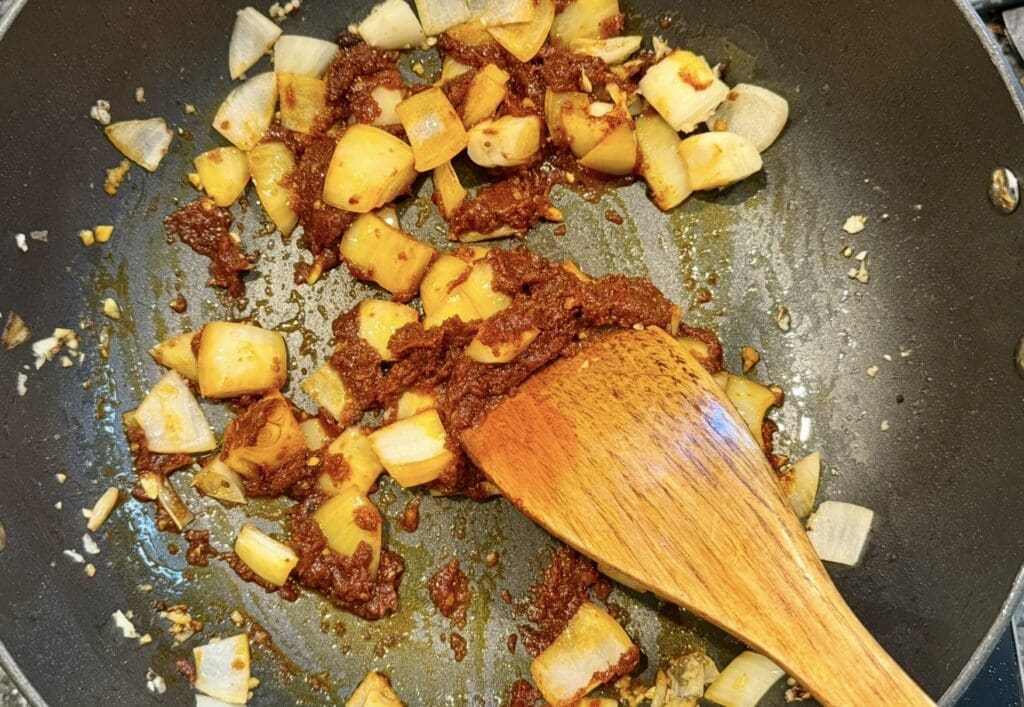
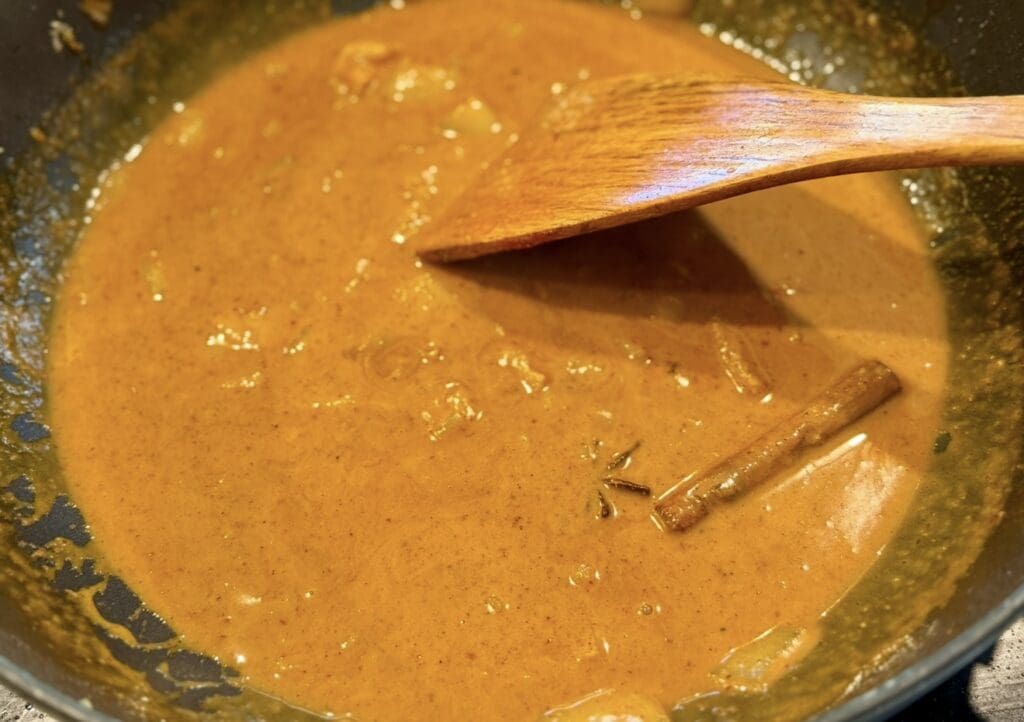
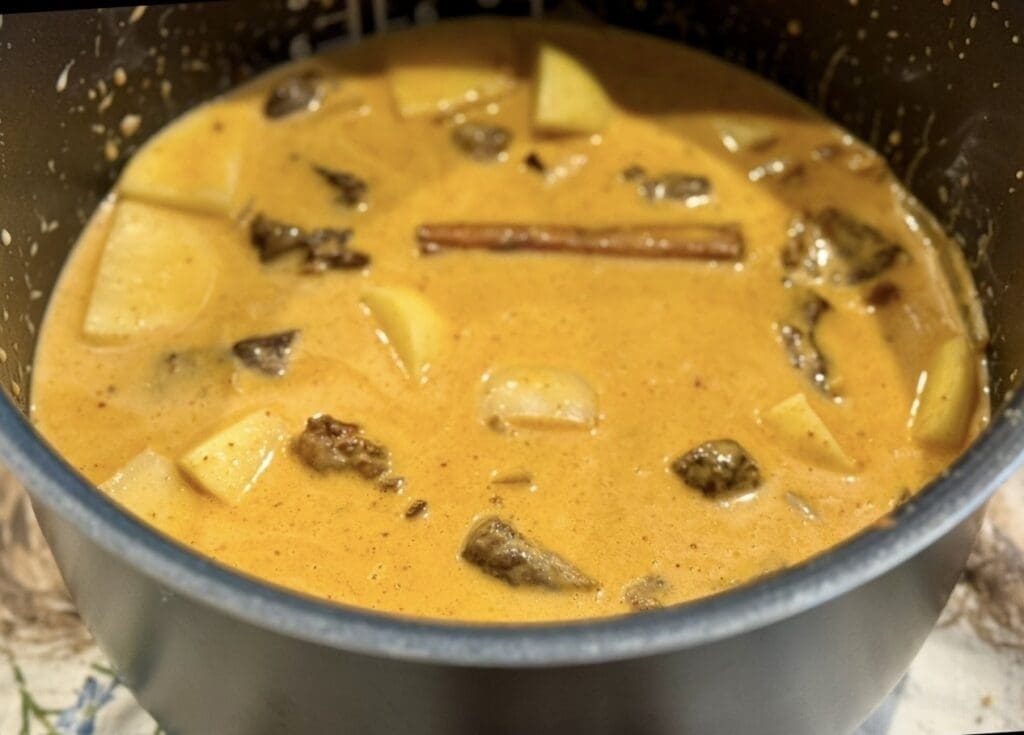
Curry sauce – Using the same frying pan, remove some of the oil and leave about 1 tablespoon, then reheat over medium-high heat. Put the garlic and onions in and saute for a minute, then add the curry paste, cinnamon stick and star anise and stir for 2 minutes. Stir in coconut cream and palm sugar, bring to a boil, then remove from heat.
Choose one of the following slow cooking methods:
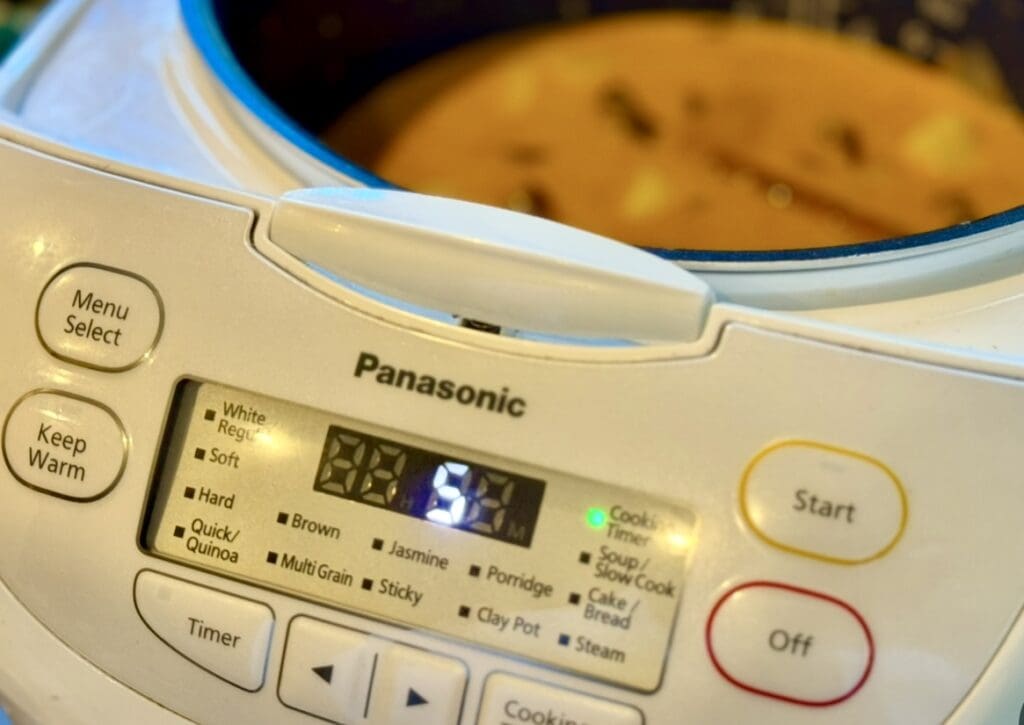
Rice cooker – Put the potatoes, beef, curry sauce, tamarind puree, fish sauce, and coconut milk into the rice bowl, then mix to combine. Use the slow cooker function and cook for two hours, stirring halfway. The curry is done when the beef and potatoes are tender.
Traditional slow cooker – Put the potatoes, beef, curry sauce, tamarind puree, fish sauce, and coconut milk into the slow cooker, then mix to combine. Slow cook on the low setting for 7 to 8 hours or until beef and potatoes are tender.
Stove top – In a large cast iron or Dutch oven, combine the potatoes, beef, curry sauce, tamarind puree, fish sauce, and coconut milk, then stir to mix. Bring the curry to a boil over medium heat, then reduce heat to low and slow cook for 2 hours or until the beef and potatoes are tender. Stir occasionally so the curry doesn’t catch at the bottom.
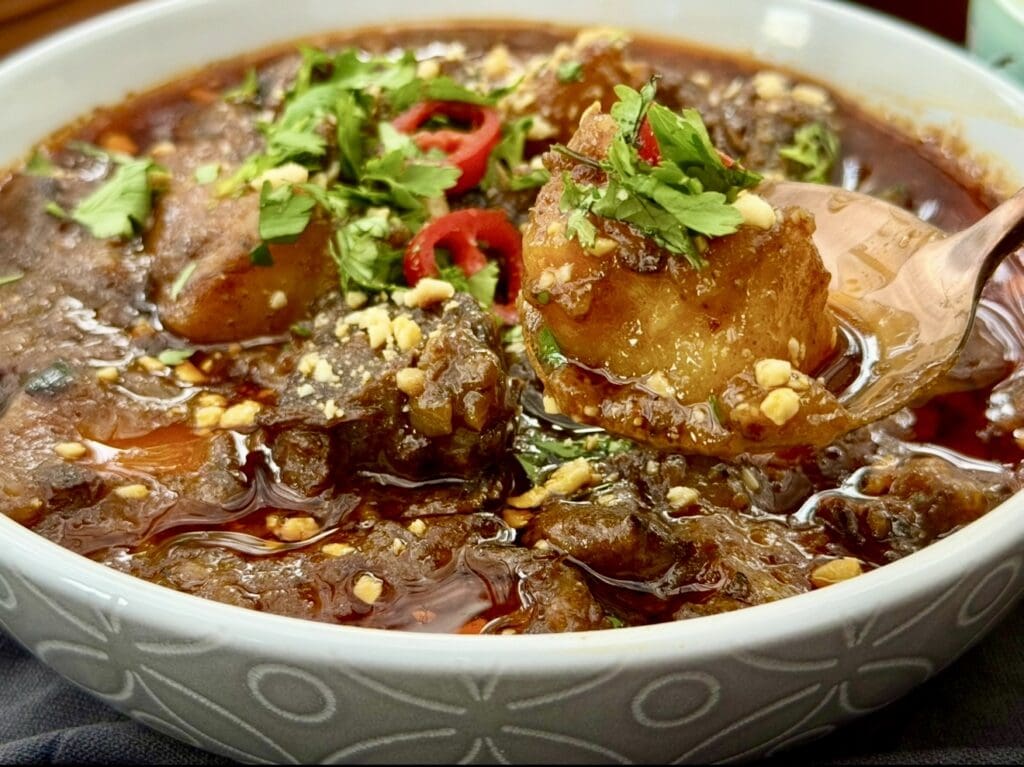
Taste the curry and adjust to your liking by adding salt and pepper if needed, or lime juice to balance the richness. Optional – top curry with crushed roasted peanuts, finely chopped coriander / cilantro and slices of red chillies.
How to store Massaman Curry
Leftovers – Allow the Massaman curry to cool completely at room temperature, then transfer into an airtight container. You can refrigerate the curry for 4 days, or freeze it for up to 3 months.
I’ve used a third-party application to calculate the calories and nutritional information, so please use this as an approximate guide only.
Cooking measurements are in Australian standard spoon and cup measurements. For specific details and conversions, visit our Australian Cooking Measurements page.
I would love your feedback and support if you made this recipe. To do this, please rate this recipe and provide a comment by scrolling down this page or by clicking that green circle on the bottom left. An email address is required (for spam), but it won’t be published. I would also love to see your dish, so don’t forget to tag me on my Instagram account ‘3catsfoodie’
Cheers – Cat T
Massaman Curry (easy rice cooker recipe)

Video
Ingredients
- 2 tbsp (40ml / 1.4floz) vegetable oil or any neutral oil
- 850g / 1.9lb chuck steak (trimmed, chopped into 2.5cm / 1-inch cubes) (NOTE 1)
- salt and pepper
- 3 large garlic cloves, minced
- 1 medium brown or yellow onion (peeled, roughly diced)
- 114g / 4oz massaman curry paste (NOTE 2)
- 1 cinnamon stick
- 1 star anise
- 400ml / 13.5floz tin of coconut cream (NOTE 3)
- 20g / 0.7oz finely chopped palm sugar or brown sugar (NOTE 4)
- 500g / 1.1lb waxy potatoes (peeled, chopped into large bite-size pieces) (NOTE 5)
- 400ml / 13.5floz tin of coconut milk (NOTE 3)
- 1 tbsp (20ml / 0.7floz) fish sauce (NOTE 6)
- 1 tbsp (20ml / 0.7floz) tamarind puree or pulp (NOTE 7)
Optional topping / garnish
- lime juice
- crushed roasted peanuts
- finely chopped coriander / cilantro
- thinly sliced red chilles
Instructions
- Season the steaks all over with salt and pepper. Remove some of the fat around the meat, but leave some to help tenderise the beef. Cut the steak into roughly 2.5cm / 1-inch chunks.
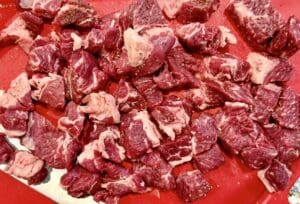
- Heat oil in a large frying pan over high heat, then brown the meat on each side for 2 or 3 minutes or until a crust forms. You may need to do this in batches. Transfer the beef onto a plate and set aside for later.
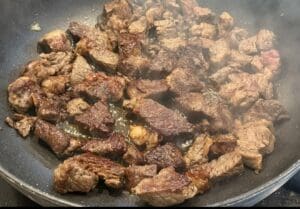
- Curry sauce – Using the same frying pan, remove some of the oil and leave about 1 tablespoon, then reheat over medium-high heat. Put the garlic and onions in and saute for a minute, then add the curry paste, cinnamon stick and star anise and stir for 2 minutes. Stir in the coconut cream and palm sugar, bring to a boil, then remove from heat.
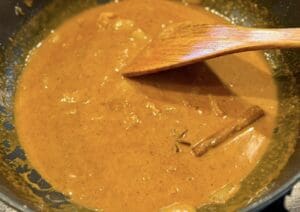
- Choose one of the following slow cooking methods:Rice cooker – Put the potatoes, beef, curry sauce, tamarind puree, fish sauce, and coconut milk into the rice bowl, then mix to combine. Use the slow cooker function and cook for two hours, stirring halfway. The curry is done when the beef and potatoes are tender.Traditional slow cooker – Put the potatoes, beef, curry sauce, tamarind puree, fish sauce, and coconut milk into the slow cooker, then mix to combine. Slow cook on the low setting for 7 to 8 hours or until beef and potatoes are tender.Stove top – In a large cast iron or Dutch oven, combine the potatoes, beef, curry sauce, tamarind puree, fish sauce, and coconut milk, then stir to mix. Bring the curry to a boil over medium heat, then reduce heat to low and slow cook for 2 hours or until the beef and potatoes are tender. Stir occasionally so the curry doesn't catch at the bottom.
- Taste the curry and adjust to your liking by adding salt and pepper if needed, or lime juice to balance the richness. Optional – top curry with crushed roasted peanuts, finely chopped coriander / cilantro and slices of red chillies.