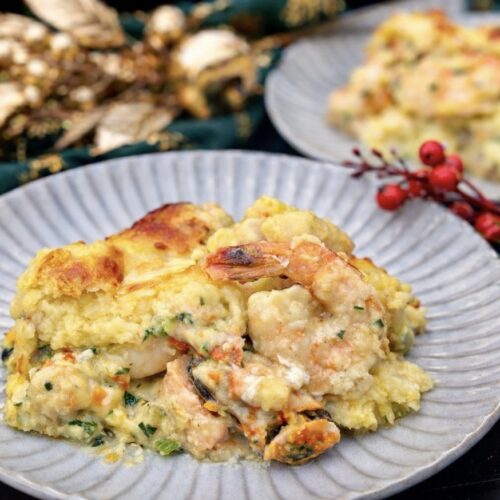
Seafood Pie (luxury version of a fish pie)

Comforting yet gourmet, this seafood pie is made with salmon, prawns, mussels, and scallops in a creamy sauce topped with mashed potatoes
Video
Ingredients
- 500ml / 17floz (2 cups) full cream milk / whole milk (NOTE 1)
- 250ml / 8 floz (1 cup) fish stock
- 1 brown onion (skin on and halved)
- 2 thyme sprigs
- 2 dried bay leaves
- 4 whole cloves
- 450gm / 16oz salmon (boneless and skinless) (NOTE 2)
- 200gm / 7oz raw prawns without shells (cleaned) (NOTE 3)
- 200gm / 7oz scallops (roe removed) (NOTE 3)
- 200gm / 7oz mussels (cleaned) (NOTE 3)
CREAMY SAUCE
- 60gm / 2oz unsalted butter
- 4 garlic cloves (minced)
- 1 small (110gm / 4oz) onion (finely chopped)
- 1 medium (150g / 5oz) carrot (peeled and diced finely)
- 1 large (60gm / 2oz) celery (finely diced)
- ⅓ cup plain flour (or a little more) (NOTE 4)
- ⅓ cup (85gm / 3oz) double cream (NOTE 5)
- 2 tbsp parsley (finely chopped)
- ½ tsp salt
- ¼ tsp freshly ground black pepper
MASHED POTATO TOPPING
- 750gm /1.7lb potatoes (chopped into large chunks) (NOTE 6)
- 80g / 3oz unsalted butter (small cubes)
- 3 tbsp (60ml / 2floz) full cream milk
- 2 large egg yolks
- ¼ tsp salt
- 100gm / 4oz shredded cheddar cheese (NOTE 7)
Instructions
Poaching the seafood
- Pour the milk and fish stock into a medium-sized saucepan. Add the onion, thyme, bay leaves, and cloves, then heat over medium heat until the mixture is just about to simmer. Reduce the heat to low.
- Gently poach the salmon for 1 minute, then remove it with a slotted spoon or strainer and transfer to a colander. Repeat this process with the prawns, mussels, and scallops, poaching each briefly and removing as soon as they are just cooked.
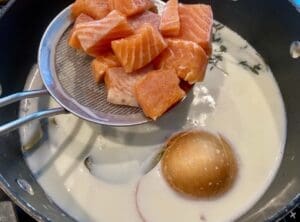
- Once all the seafood has been poached, strain the milk mixture to remove and discard the solids. Set the poaching milk aside, as it will be used to make the sauce.
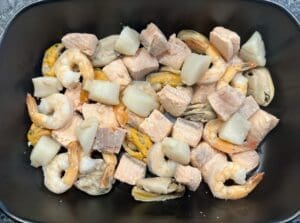
- Use a clean tea towel or paper towels to gently pat the poached seafood dry. This step is important to avoid a watery pie. Arrange the seafood evenly over the base of a large baking dish (approximately 30 × 19 × 6 cm or 12 × 8 × 2.5 inches), making sure each serving has a good mix of seafood.
Creamy white sauce
- Melt the butter in a large, deep frying pan over medium heat. Add the garlic and onion and sauté for 2 minutes or until fragrant. Stir in the carrots and celery, then cook for about 5 minutes, or until the vegetables have softened.
- Sprinkle over the flour and stir well to coat the vegetables. Pour in half of the reserved poaching milk and cook, stirring constantly, until the mixture becomes thick and sticky. Add the remaining milk and stir until smooth.
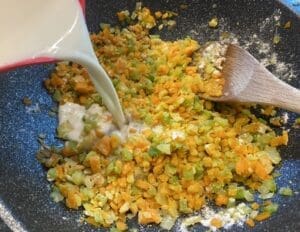
- Reduce the heat to low, then stir in the cream, salt, and pepper. Simmer gently for 5 minutes, stirring occasionally. If the sauce looks too thin, sprinkle 1 to 3 teaspoons of flour over the surface, one teaspoon at a time, stirring well after each addition until the desired thickness is reached.
- The sauce should be thick enough to coat and hug the seafood. Taste and adjust the seasoning if needed, then remove from the heat and stir through the parsley.
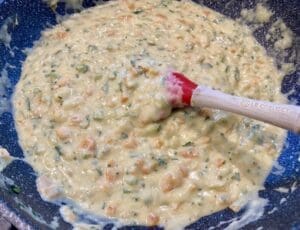
- Pour the sauce evenly over the prepared seafood and use a spatula to level the surface.
Mashed Potato Topping
- Preheat the oven to 180°C or 350°F
- Place the potatoes in a saucepan, add 1 tablespoon of salt, and cover with water until the potatoes are submerged by about 2.5 cm or 1 inch. Bring to a boil over high heat, then reduce the heat to medium and cook until the potatoes are very tender.
- Drain the potatoes into a colander and leave them to steam dry for 5 minutes. This step helps remove excess moisture for a fluffier mash.
- Mash the potatoes using a potato ricer or masher. Add the butter and milk and mix until smooth. Stir in the egg yolks and salt until well combined.
- Spoon the mashed potato over the seafood filling and level the surface. Use a fork to create swirls on top, then sprinkle evenly with cheese.
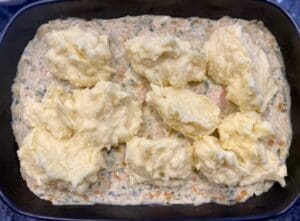
- Bake for 35 minutes, or until the top is golden and lightly crisp.
Notes
(NOTE 1) Milk: Use full-cream or whole milk for poaching the seafood. Lower-fat or skim milk can cause a watery sauce once the pie has baked.
(NOTE 2) Fish: I used skinless, boneless salmon, but any semi-firm fish works well. Good options include perch, monkfish, cod, haddock, halibut, tilapia, barramundi, snapper, or ocean trout. If you don’t mind a flakier fish pie, you can use whatever fish you like, as long as it’s skinless and boneless. For a different flavour profile, you can also mix in a small amount of smoked fish, such as smoked cod.
(NOTE 3) Seafood: I used a mix of salmon, prawns, mussels, and scallops. Apart from the salmon, the seafood was frozen and thawed before cooking. You don’t have to use the exact combination I did, and you can easily change the ratios to suit your taste. If you prefer a classic fish pie, simply swap the seafood for fish using equal amounts. For this recipe, that would be 1050 g or 2.3 lb of fish. You can also create your own mix, such as 70% fish and 30% prawns.
(NOTE 4) Plain flour does not contain added salt or leavening agents such as baking powder, which makes it ideal for thickening sauces without affecting flavour or texture.
(NOTE 5) Double cream: Double cream has a high fat content of around 50 percent. It’s made by skimming the top layer of cream from cow’s milk, giving it a thicker, richer consistency than other types of cream. This helps create a luxurious, creamy sauce that is less likely to split during cooking.
(NOTE 6) Potatoes - Starchy potatoes work best for mashed potatoes. Good options include Coliban, Desiree, Dutch Cream, Sebago, Maris Piper, King Edward, Russet, or Yukon Gold.
(NOTE 7) Cheese - Any good melting cheese will work well here. Swiss, Monterey Jack, and most types of cheddar are great choices. It’s worth grating your own cheese rather than using pre-shredded varieties, as the anti-caking agents can prevent the cheese from melting smoothly once heated.
Storage: Once baked, allow the seafood pie to cool completely, then cover and store it in the fridge for up to 3 days. Store leftovers in an airtight container or tightly covered baking dish to prevent the mash from drying out.
Reheating: To reheat without drying it out, cover the pie loosely with foil and warm it in a 170°C or 340°F oven until heated through. Removing the foil for the last few minutes will help re-crisp the top. Avoid reheating on high heat, as this can dry out the seafood and cause the sauce to split. You could also microwave the pie over gentle heat until heated through.
Nutrition Information is estimated using a third-party calculator and should be used as a guide only.
Australian Measurements: All measurements on this website use Australian standard cups and spoons. For conversion details, see my Australian Cooking Measurements page.
I’d love your feedback! If you made this recipe, please leave a star rating and comment below; it really supports my blog and helps others find the recipe. Your email address is required to comment (to prevent spam) but will not be published. If you share your dish on Instagram, don’t forget to tag me. I’d love to see it! @3catsfoodie
Cheers – Cat T
Nutrition
Serving: 1 ServingCalories: 686kcalCarbohydrates: 42gProtein: 39gFat: 41gSaturated Fat: 22gPolyunsaturated Fat: 4gMonounsaturated Fat: 11gTrans Fat: 1gCholesterol: 252mgSodium: 1019mgPotassium: 1461mgFiber: 5gSugar: 9gVitamin A: 5672IUVitamin C: 34mgCalcium: 350mgIron: 3mg