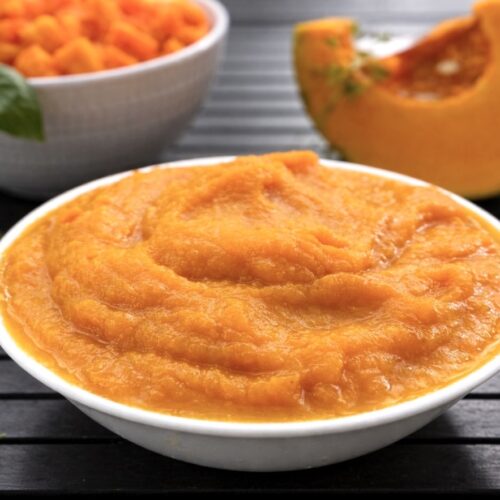
How to Make Homemade Pumpkin Purée (So Easy!)
Learn how to make homemade pumpkin purée from scratch. Easy method, smooth texture, perfect for baking, savoury dishes and baby food
Video
Ingredients
- 1 butternut pumpkin or squash (NOTE 1)
- 1 tbsp (20ml / 0.7floz) regular or light olive oil (NOTE 2)
Instructions
- Preheat the oven to 180°C / 350°F. Line a large baking tray with non-stick baking paper or parchment paper.
- Cut the pumpkin in half lengthwise and leave the skin on. Use a spoon to scoop out and discard the seeds.
- Brush the pumpkin halves all over with olive oil, then place them on the tray with the flesh facing down and skin facing up.
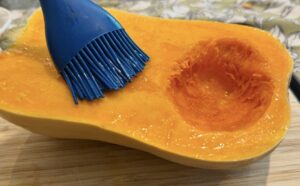
- Roast for about 1 hour, checking around the 45 minute mark. The pumpkin is ready when the flesh is completely tender and a skewer slides through easily.
- Remove from the oven and let rest for 10 minutes. Peel off the skin, which should come away easily.
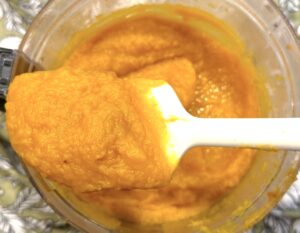
- Transfer the pumpkin flesh to a food processor and blend until smooth. If the purée is too thick, add a small splash of water and blend again until you reach your preferred consistency. If it’s too watery, transfer the purée to a saucepan and cook over low heat, stirring often, until thickened. Keep the heat gentle to avoid scorching.
Notes
(NOTE 1) Pumpkin: I just love butternut pumpkin, also known as butternut squash in some parts of the world. It’s sweet, nutty and creamy, and one of the easiest pumpkins to prepare, with plenty of flesh and very little stringy pulp.
My whole pumpkin weighed 1.7 kg (about 3.7 lb) before roasting. After roasting and removing the skin, it yielded 715 g (about 1.6 lb), which is just under 4 cups of purée.
Other pumpkin varieties that work well for purée include Jarrahdale, Queensland Blue and Kabocha in Australia, sugar pumpkin, Kabocha and Hubbard squash in the US, and Crown Prince in the UK.
Cooking times can vary by variety and size, so roast the pumpkin until the flesh is completely soft and easily pierced with a fork for the smoothest purée.
(NOTE 2) Olive oil: Brushing the pumpkin with a small amount of olive oil helps the flesh roast evenly and prevents it from drying out in the oven. It also helps the pumpkin develop better flavour and colour, resulting in a smoother, richer purée once blended.
Freezing: Pumpkin purée freezes beautifully. Portion it into freezer-safe containers or silicone trays for easy use. Once frozen solid, you can transfer portions to a sealed freezer bag to save space. It will keep well for up to 3 months. Thaw overnight in the fridge before using.
Reheating: Reheat gently on the stovetop over low heat or in the microwave in short intervals, stirring in between. If the purée thickens slightly after chilling or freezing, simply stir in a small splash of water to loosen it.
For babies and toddlers: Store baby portions separately in small containers or ice cube trays for convenience. Always reheat until just warm, never hot, and stir well to eliminate any hot spots before serving. Discard any leftovers that have already been offered to your baby. See how I Store Homemade Baby Food
Nutrition Information: Nutrition information is estimated using a third-party calculator and should be used as a guide only.
Australian Measurements: All measurements on this website use Australian standard cups and spoons. For conversion details, see my Australian Cooking Measurements page.
I’d love your feedback! If you made this recipe, please leave a star rating and comment below; it really supports my blog and helps others find the recipe. Your email address is required to comment (to prevent spam) but will not be published. If you share your dish on Instagram, don’t forget to tag me. I’d love to see it! @3catsfoodie
Cheers – Cat T
Nutrition
Serving: 1 CupCalories: 119kcalCarbohydrates: 20gProtein: 2gFat: 5gSaturated Fat: 1gPolyunsaturated Fat: 1gMonounsaturated Fat: 3gSodium: 7mgPotassium: 616mgFiber: 4gSugar: 4gVitamin A: 18603IUVitamin C: 37mgCalcium: 84mgIron: 1mg