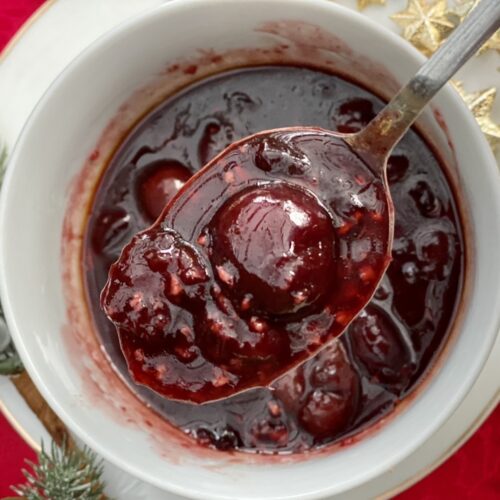
Cherry Sauce (Savoury and buttery)

This savoury cherry sauce is rich, glossy and perfectly balanced, ideal for duck, quail or pork. A beautiful sauce for entertaining
Ingredients
Ginger wine stock
- ¼ cup raw cane sugar (NOTE 1)
- ½ cup (125ml / 4floz) red wine vinegar
- ½ cup (125ml / 4floz) dry red wine (NOTE 2)
- 1 cup (250ml / 8.5 floz) salt-reduced or low-sodium chicken stock (NOTE 3)
- 20g / 0.7oz fresh ginger, peeled & finely grated
- ¼ tsp cayenne pepper, optional
- ½ tsp salt
Cherry sauce
- 40g / 1.4oz unsalted butter
- 400g / 14oz fresh or frozen pitted cherries (NOTE 4)
- 2 tsp white sugar
- 1 tbsp (20ml / 0.7floz) cherry brandy, optional (NOTE 5)
Instructions
Ginger wine stock
- Place the sugar and vinegar in a small saucepan over medium-high heat. Simmer for about 2 minutes, or until the mixture thickens to a light syrup consistency.
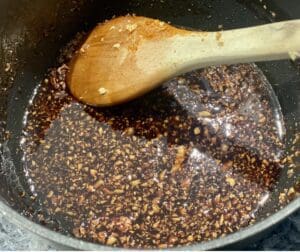
- Add the wine and continue to simmer for 1 minute, allowing the alcohol to cook off. Pour in the stock and simmer for approximately 5 minutes, or until the sauce lightly coats the back of a spoon. Stir in the grated ginger, cayenne pepper and salt, then simmer for a further minute.
- Transfer the sauce to a large heatproof bowl and allow it to cool at room temperature for about 1 to 2 hours. This resting time helps the flavours develop and deepen.
Cherry sauce
- Melt the butter in a saucepan over medium heat. Add the cherries and sugar, stirring for about 2 minutes. Some cherries will begin to soften and break down. Gently crush a portion of them with a wooden spoon, leaving some whole for texture.
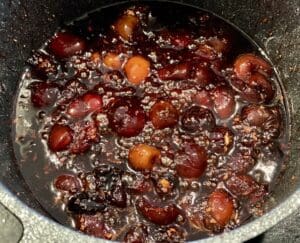
- Add the brandy and simmer for 1 minute to allow the alcohol to cook off. Pour in the prepared ginger wine stock and bring to a gentle boil. Reduce to a simmer and cook for a further 2 minutes, allowing the flavours to combine.
- Taste and season with salt and freshly ground black pepper as needed. Serve warm over duck, quail or pork. The sauce will thicken slightly as it cools.
Notes
(NOTE 1) Raw cane sugar (or turbinado or demerara sugar): Raw sugar is less refined than white sugar and contains natural molasses, giving it a light caramel flavour and subtle depth. Its slightly larger crystals also dissolve well in sauces. If preferred, you could swap raw sugar for equal amounts of brown sugar or regular white sugar.
(NOTE 2) Dry red wine: Suitable options include Pinot Noir, Merlot, Cabernet Sauvignon, Syrah or Shiraz. Choose a wine you enjoy drinking rather than an expensive bottle, as the flavour carries through the sauce. Cooking with a wine you like ensures a better overall result.
(NOTE 3) Chicken stock/broth: I prefer using salt-reduced or low-sodium stock to maintain better control over seasoning. This allows you to adjust the salt to taste. It is always easier to add seasoning than to correct an over-salted dish.
(NOTE 4) Cherries: For convenience, I use pitted frozen cherries. Fresh pitted cherries work beautifully as well. I do not recommend canned or jarred cherries for this recipe, as they are overly soft and are often sweetened, which can affect the balance of the sauce.
(NOTE 5) Cherry brandy (or kirsch or regular brandy): Cherry brandy adds depth and a subtle warmth to the sauce, enhancing the natural sweetness of the cherries. Cherry brandy or kirsch will intensify the fruit flavour, while regular brandy provides a more neutral warmth. The alcohol cooks off during simmering, leaving behind a rich, rounded finish. This ingredient is optional but highly recommended for added complexity.
Leftovers: Allow the Cherry Sauce to cool completely at room temperature, then transfer it into a sealed container and store it in the fridge. The sauce should be good for 3 days.
Nutrition Information is estimated using a third-party calculator and should be used as a guide only.
Australian Measurements: All measurements on this website use Australian standard cups and spoons. For conversion details, see my Australian Cooking Measurements page.
I’d love your feedback! If you made this recipe, please leave a star rating and comment below; it really supports my blog and helps others find the recipe. Your email address is required to comment (to prevent spam) but will not be published. If you share your dish on Instagram, don’t forget to tag me. I’d love to see it! @3catsfoodie
Cheers – Cat T
Nutrition
Serving: 1servingCalories: 153kcalCarbohydrates: 19gProtein: 1gFat: 6gSaturated Fat: 4gPolyunsaturated Fat: 0.3gMonounsaturated Fat: 2gTrans Fat: 0.2gCholesterol: 14mgSodium: 257mgPotassium: 172mgFiber: 1gSugar: 16gVitamin A: 233IUVitamin C: 4mgCalcium: 13mgIron: 0.4mg